

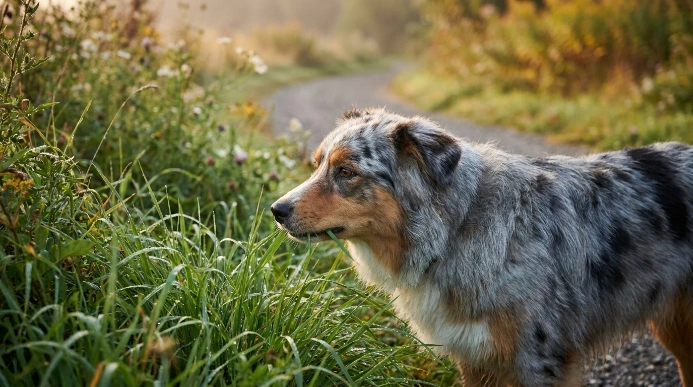
Why Do Dogs Eat Grass? 7 Surprising Reasons to Know
You take your dog outside for a normal walk, and within seconds, their nose is buried in the lawn. Instead of sniffing around or chasing something interesting, they start chewing grass.
Naturally, you may wonder: Why do dogs eat grass?
One of the most common explanations is that dogs eat grass because they are sick and want to make themselves vomit. While stomach discomfort can sometimes be involved, the explanation isn’t nearly that simple.
Grass eating is extremely common among dogs, including perfectly healthy ones.
One frequently cited study of plant-eating behavior in domestic dogs found that 79% of healthy dogs with regular access to plants had eaten grass or other plants. Among a larger group of plant-eating dogs, only 9% were frequently reported to look ill beforehand, while only 22% frequently vomited afterward.
In other words, your dog occasionally turning into a lawn mower doesn’t automatically mean something is wrong.
Still, how your dog eats grass and what happens afterward can tell you a lot.
Here are seven possible explanations.
1. Eating Grass May Be a Natural Dog Behavior
The simplest explanation may be that eating plants is simply something dogs do.
Dogs are not obligate carnivores, and plant-eating behavior isn’t unique to pets living in our homes. Plant material has also been observed in wild canids.
Researchers studying domestic dogs concluded that plant eating—especially grass eating—appears to be a normal behavior rather than something primarily caused by illness, vomiting, or nutritional deficiency.
That means a healthy dog calmly nibbling a few blades during a walk may not need to be stopped immediately.
Pay more attention to changes in behavior.
A dog that has casually grazed on grass for years is very different from a dog that suddenly begins desperately consuming large amounts of it.
The pattern matters as much as the grass itself.
2. Your Dog Might Simply Like Grass
Sometimes pet owners look for a complicated medical explanation when the answer may be surprisingly simple:
Your dog may enjoy it.
Fresh grass has a distinctive smell, taste, and texture. Some dogs seem particularly interested in young, tender grass, especially during certain seasons.
Dogs also explore their surroundings using their noses and mouths. For a curious dog, tasting something growing outside isn’t particularly unusual.
This may explain why some dogs slowly select particular blades rather than frantically swallowing anything green they can find.
Younger dogs may be especially curious. The research on plant eating found that younger dogs tended to eat plants more frequently than older dogs.
So if your healthy puppy occasionally samples the lawn, curiosity could be part of the explanation.
That doesn’t mean every plant is safe, however. Grass and unknown plants should never be treated as interchangeable.
3. Hunger May Encourage Grass Eating
Does your dog seem particularly interested in grass before breakfast or shortly before their next meal?
Hunger could contribute.
Research has suggested that grass-eating behavior may change depending on satiety and time of day. Dogs may be more interested in grass when their stomach isn’t full.
This doesn’t necessarily mean your dog isn’t getting enough food.
A dog can receive an appropriate daily amount and still become hungry between meals.
If grass eating consistently happens before feeding, observe the pattern for several days. Feeding schedules can sometimes matter as much as total daily food intake.
Don’t automatically increase portions, particularly if your dog is already at a healthy weight. Excess calories can create an entirely different health problem.
Instead, discuss persistent hunger with your veterinarian. They can help determine whether meal timing, diet composition, calories, medication, activity levels, or another factor needs attention.
4. Some Dogs May Seek Fiber
Another popular explanation for why dogs eat grass involves fiber.
Grass contains plant fiber, and adequate dietary fiber plays an important role in normal gastrointestinal function.
There are anecdotal cases in which persistent plant eating improved after dietary changes, but this doesn’t mean every grass-eating dog has a fiber deficiency. Current evidence does not establish nutritional deficiency as the main explanation for normal grass eating.
If your dog eats a complete and balanced diet and otherwise appears healthy, occasional grass eating isn’t enough evidence to start adding fiber supplements.
Diet changes should have a reason behind them.
This is especially important if your dog already experiences food sensitivities. Our guide to dog food allergies explains some of the signs that can suggest food-related problems rather than ordinary grazing.
If grass eating becomes excessive, ask your veterinarian to review your dog’s complete diet instead of experimenting with multiple supplements at home.
5. Boredom or Habit Can Play a Role
Dogs don’t always do things because of a physical need.
Sometimes they do them because there isn’t anything more interesting happening.
A dog spending long periods alone in a yard might chew grass for stimulation. What begins as exploratory behavior can eventually become a habit.
Think about the circumstances.
Does your dog eat grass while playing and exploring, or spend long periods repeatedly grazing because there is little else to do?
Providing more appropriate outlets can help.
Regular walks, sniffing opportunities, interactive play, training sessions, food puzzles, and safe chew toys can make a dog’s environment more engaging.
Behavior becomes particularly important when grass eating accompanies other repetitive or unusual habits.
Stress can also affect behavior. Dogs experiencing difficulty when left alone, for example, can show behaviors far beyond simple barking. Our guide to dog separation anxiety explains what to watch for when anxiety may be contributing to a dog’s behavior.
6. An Upset Stomach Can Sometimes Be Involved
Here’s where the popular belief contains a little truth—but often gets exaggerated.
Some dogs experiencing nausea or gastrointestinal discomfort may eat grass.
What isn’t supported is the idea that most dogs eat grass specifically to force themselves to vomit.
In the large observational study mentioned earlier, only a minority of dogs frequently appeared sick before eating plants, and only 22% frequently vomited afterward.
Another controlled study recorded 374 grass-eating events but only two vomiting events. Interestingly, the dogs actually spent less time eating grass while experiencing experimentally induced loose stools than when their stools were normal.
So vomiting after grass eating can happen, but grass eating doesn’t automatically mean your dog was sick beforehand.
Context is important.
If your dog has diarrhea in addition to unusual grazing, see our guide to dog diarrhea and when to call a veterinarian.
Occasional grazing followed by a single vomiting episode in an otherwise energetic dog may be very different from repeated vomiting accompanied by weakness, abdominal discomfort, appetite loss, or diarrhea.
7. Sudden Excessive Grass Eating Can Signal a Problem
The most important question isn’t simply:
Does my dog eat grass?
Ask instead:
Has my dog’s grass-eating behavior changed?
A dog that occasionally nibbles grass and then continues playing normally usually presents a very different picture from one suddenly eating large amounts of grass frantically.
Watch for other changes, including:
- repeated vomiting
- persistent diarrhea
- loss of appetite
- lethargy
- abdominal discomfort or swelling
- unexplained weight loss
- blood in vomit or stool
- excessive drooling
- repeated attempts to vomit
- sudden behavioral changes
These symptoms deserve more attention than grass eating by itself.
Skin problems can also point toward broader health or dietary issues. If your dog is simultaneously scratching excessively, our dog itchy skin guide covers common causes and signs worth discussing with your veterinarian.
Similarly, persistent paw licking in dogs may have behavioral, environmental, dermatological, or allergy-related causes.
Looking at the whole dog rather than one isolated behavior usually gives you much better information.
Is It Safe for Dogs to Eat Grass?
Occasional consumption of clean grass is generally considered low-risk for an otherwise healthy dog.
The bigger concern can be what is on or around the grass.
Lawns, parks, sidewalks, and public green spaces may contain herbicides, pesticides, fertilizers, animal feces, parasites, bacteria, discarded food, or other contaminants.
PetMD specifically cautions that pesticides and other environmental contaminants—as well as parasites and pathogens associated with animal waste—can make grass eating risky.
Unknown plants create another problem.
Your dog doesn’t know the difference between harmless vegetation and a toxic ornamental plant. Don’t assume something is safe merely because it is green or growing naturally.
If a lawn has recently been chemically treated, keep your dog away according to the product’s safety directions.
And if you suspect your dog has eaten a toxic plant, pesticide, fertilizer, or other potentially poisonous substance, contact a veterinarian or animal poison service promptly rather than waiting for symptoms to develop.
Should You Stop Your Dog From Eating Grass?
Not necessarily.
If your dog occasionally eats a small amount of untreated grass, remains energetic, has a normal appetite, and isn’t experiencing digestive problems, there may be no reason for alarm.
Instead of obsessively preventing every blade from entering your dog’s mouth, focus on safety and patterns.
Avoid treated lawns and areas contaminated with animal waste. Don’t allow your dog to consume unidentified plants. Make sure they receive a complete and balanced diet, regular exercise, mental stimulation, and access to fresh water.
If the behavior becomes excessive, don’t simply punish or constantly pull your dog away.
Try to understand why it changed.
Why Does My Dog Eat Grass and Then Throw Up?
Grass can sometimes irritate the gastrointestinal tract, and some dogs do vomit after eating it.
But vomiting isn’t the typical outcome for every grass-eating dog.
Research does not support the widespread belief that dogs routinely eat grass specifically because they need to vomit.
If your dog vomits once but then acts completely normal, monitor them closely.
Repeated vomiting is different.
Contact your veterinarian if vomiting continues or occurs alongside diarrhea, lethargy, pain, appetite loss, dehydration, blood, abdominal swelling, or other concerning symptoms.
When Should You Call a Vet?
Grass eating deserves veterinary attention when it becomes a new, excessive, or compulsive behavior or occurs alongside signs of illness.
You should be particularly cautious if your dog is repeatedly vomiting, cannot keep water down, has persistent diarrhea, appears weak or painful, stops eating, develops a swollen abdomen, loses weight unexpectedly, or may have consumed chemicals or toxic plants.
Puppies, senior dogs, and dogs with existing medical conditions may warrant earlier veterinary advice.
Your veterinarian can evaluate the bigger picture rather than assuming the grass itself is the problem.
Frequently Asked Questions
Why do dogs eat grass if they aren’t sick?
Grass eating appears to be a common normal behavior. Dogs may eat it because of instinct, curiosity, taste, hunger, habit, or other factors. Research has found that most plant-eating dogs aren’t regularly sick beforehand.
Do dogs eat grass because they need to vomit?
Usually, no. Some dogs vomit after eating grass, but studies suggest vomiting is not the normal outcome of most grass-eating episodes.
Does eating grass mean my dog has worms?
Grass eating alone isn’t enough to diagnose intestinal parasites. However, contaminated grass and soil can expose dogs to unwanted organisms. If your dog has diarrhea, weight loss, poor condition, or other symptoms, ask your veterinarian whether parasite testing is appropriate.
Should I change my dog’s food if they eat grass?
Not solely because your dog occasionally eats grass. If they receive a nutritionally complete diet and appear healthy, grass eating doesn’t prove a nutritional deficiency. Persistent or suddenly increased grazing is worth discussing with your veterinarian before making major dietary changes.
Why is my dog suddenly eating a lot of grass?
A sudden change deserves more attention than a long-standing occasional habit. Consider whether your dog’s feeding schedule, environment, activity, behavior, stool, appetite, or overall health has changed. Excessive grazing accompanied by illness should be evaluated by a veterinarian.
PetCareRoutine Perspective
Seeing your dog munching on the lawn can look strange, but grass eating is often much more normal than pet owners assume.
The available research challenges two popular explanations: that dogs generally eat grass because they’re sick and that they routinely use it to make themselves vomit.
For many healthy dogs, occasional grazing may simply be part of normal canine behavior.
What matters most is the pattern.
A few blades of clean grass from an otherwise happy, energetic dog usually tell a very different story from sudden frantic grazing accompanied by vomiting, diarrhea, appetite changes, pain, or lethargy.
Know your dog’s normal habits, keep them away from chemically treated lawns and unknown plants, and pay attention when those habits suddenly change.
When grass eating becomes just one part of a larger change in your dog’s health, that’s when the behavior deserves a closer look.
Source: https://www.sciencedirect.com/science/article/pii/S0168159107001827







[…] interested in eating unusual outdoor material, you may also notice grazing. Our guide explaining why dogs eat grass covers another common behavior that can be normal in some dogs but occasionally appears alongside […]
Comments are closed.