
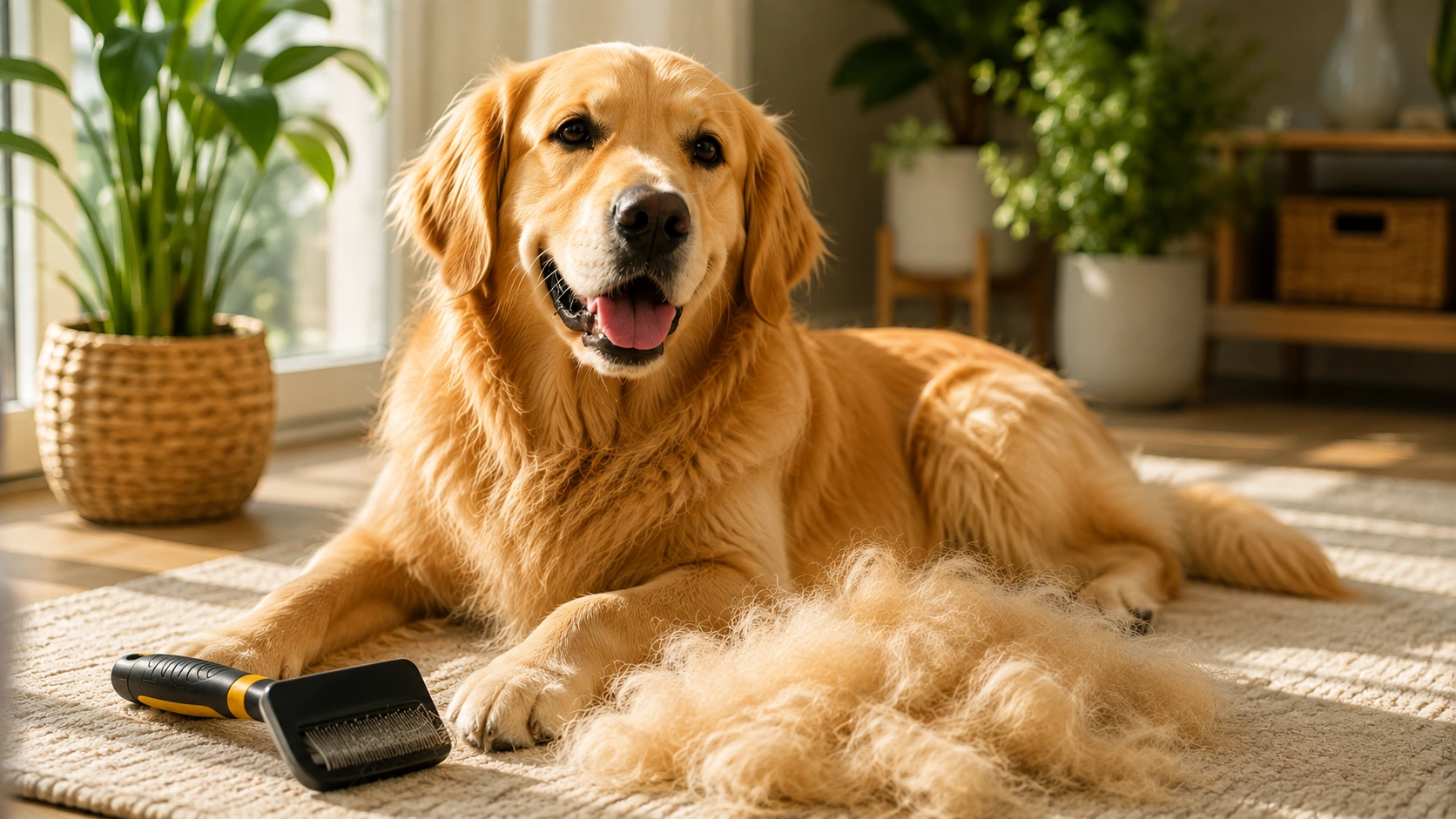
Dog hair on the sofa, your clothes, the car seats and seemingly every corner of the house can make shedding feel like a problem that needs to be stopped. But in most healthy dogs, shedding is not a defect. It is a normal part of replacing old hair with new growth.
The better goal is to manage dog shedding effectively while learning what is normal for your individual dog. Breed, coat type, season, indoor living, nutrition and health can all influence how much fur you see.
According to the Merck Veterinary Manual, hair growth is influenced by genetics, nutrition, hormones, disease and seasonal changes. Many dogs naturally shed more in spring and fall as their coats respond to changes in temperature and daylight.
So before buying every de-shedding product you can find, start by understanding your dog’s coat and building a routine that actually suits it.
Is Dog Shedding Normal?
Yes. Some amount of shedding is normal for most dogs.
The amount varies dramatically. A short-coated dog may release small hairs steadily throughout the year, while a double-coated breed may seem relatively manageable for months and then lose large amounts of undercoat during seasonal shedding.
VCA Animal Hospitals’ veterinary guidance on coat care explains that breeds with thick outer coats and fine undercoats can undergo two heavy seasonal shedding cycles, while many short-haired breeds shed at lower levels throughout the year.
Indoor living can blur these seasonal patterns because artificial lighting and stable temperatures may contribute to more consistent year-round shedding.
What matters most is knowing your dog’s usual pattern. A sudden change deserves more attention than simply comparing your dog with another breed.
1. Brush Your Dog Consistently
Regular brushing is one of the simplest and most useful ways to manage normal dog shedding.
It removes loose hair before it lands around your home, clears dead skin cells and debris, and helps distribute natural skin oils through the coat. VCA notes that all dogs benefit from regular brushing, although the ideal frequency depends on coat type.
Heavy shedders may benefit from brushing several times a week or even daily during peak shedding. Dogs with long, silky or curly coats may also need frequent brushing to prevent tangles and mats.
Short-coated dogs generally need less intensive brushing, but consistency still matters.
If you’re building a complete routine, our dog grooming at home guide covers brushing, bathing, nails, ears and other everyday grooming basics.
2. Use the Right Brush for the Coat
More brushing is not automatically better if the tool is wrong for your dog’s coat.
Smooth, short coats often respond well to grooming gloves or short-bristled brushes. Medium-length shedding coats can benefit from combs or firmer bristle brushes. Dogs with dense undercoats may need tools designed to reach loose undercoat hair, while long coats often benefit from long-toothed combs.
The goal is to remove loose hair gently, not scrape the skin or pull healthy coat out.
Use light pressure and stop if your dog shows discomfort. Aggressive de-shedding can irritate the skin and turn an otherwise useful grooming session into something your dog learns to avoid.
For mats and difficult tangles, don’t blindly cut close to the skin with scissors. Dog skin can be pulled into a mat and accidentally cut. Severe matting is a good reason to involve an experienced groomer or veterinarian.
3. Bathe Your Dog When the Coat Needs It
Bathing can loosen dead hair and help remove fur that is already ready to shed. But bathing more frequently than your dog’s skin and coat can tolerate is not a shortcut to a shed-free home.
Bathing needs vary with coat type, lifestyle and skin health. A dog that spends weekends swimming and rolling in mud has different needs from a mostly indoor dog with a clean coat.
Use a shampoo formulated for dogs and rinse thoroughly. Human shampoos may not be appropriate for canine skin.
Our guide on how often you should bathe your dog explains how coat, activity and skin condition should influence the schedule.
If your dog has allergies, recurrent skin problems or requires medicated bathing, follow your veterinarian’s instructions rather than a generic grooming schedule.
4. Feed a Complete, Balanced Diet
A healthy coat is built from the inside as well as maintained from the outside.
Hair growth can be affected by nutrition, and significant nutritional deficiencies may contribute to poor coat quality or hair loss. That does not mean every shedding dog needs supplements.
Start with an appropriate complete and balanced diet that meets your dog’s nutritional needs. If the coat becomes unusually dull, brittle or thin despite appropriate grooming, discuss the change with your veterinarian.
Avoid randomly adding oils, vitamins or high-dose supplements simply because a product promises a shinier coat. More is not always better, and supplements can alter the nutritional balance of an otherwise suitable diet.
If shedding occurs alongside chronic itching, ear trouble, paw licking or digestive symptoms, diet may be part of a larger investigation. Our dog food allergies guide explains why a true food allergy should be diagnosed systematically rather than assumed from shedding alone.
5. Pay Attention to Skin Health
Normal shedding should still leave your dog with an intact, healthy-looking coat.
Look beneath the fur while you brush. Check for redness, flakes, sores, scabs, unusual odor, parasites, bumps, excessive oiliness or areas where the coat is becoming noticeably thin.
This turns routine grooming into a useful health check.
Itching is especially important. A dog that is scratching, licking or chewing may actually be breaking and removing hair rather than simply shedding it normally.
Allergies, fleas, mites, infections and other skin problems can contribute to hair loss. If itching is part of the picture, see our guide to common causes of dog itchy skin.
Similarly, persistent paw chewing can have several causes beyond ordinary grooming behavior. Our dog paw-licking guide explains the warning signs worth watching.
6. Expect Seasonal Changes
If your dog suddenly seems to be producing enough loose fur to build another dog, the calendar may offer part of the explanation.
Many dogs shed more heavily when transitioning between seasonal coats. Double-coated breeds can release substantial amounts of undercoat during these periods.
The American Animal Hospital Association explains that shedding is part of the normal hair-growth cycle and that genetics, environment and overall health influence its timing and intensity.
During a heavy but otherwise normal seasonal shed, increase brushing frequency gradually. Removing loose undercoat in manageable sessions is usually more comfortable than trying to remove everything in one marathon grooming session.
Keep sessions calm and reward cooperation. Five or ten comfortable minutes can be more productive than forcing a stressed dog through a long session.
7. Know When Shedding Is Actually Hair Loss
This is the distinction every owner should understand.
Normal shedding replaces old hair without leaving obvious bald areas. Excessive or abnormal hair loss can look different.
The Merck Veterinary Manual’s guidance on alopecia notes that shedding may be abnormal when it produces obvious loss of coat or bald spots. Hair loss can be associated with infections, parasites, allergies, hormonal disorders, nutritional problems and other conditions.
Contact your veterinarian if you notice bald patches, symmetrical thinning, inflamed skin, sores, persistent itching, significant dandruff, strong odor or a sudden unexplained change in your dog’s coat.
Also pay attention to changes outside the skin. Weight gain, unusual tiredness, increased thirst, appetite changes or other new symptoms alongside coat changes can give your veterinarian important clues.
Can You Stop a Dog From Shedding Completely?
Usually, no—and you should not need to.
Healthy shedding is part of normal hair replacement. The realistic goal is to reduce loose hair around the home and keep the skin and coat healthy.
A consistent combination of appropriate brushing, sensible bathing, good nutrition and routine health care can make normal shedding much easier to live with.
Be cautious with products that promise to eliminate shedding entirely. A supplement, shampoo or grooming tool cannot change the fundamental biology of a healthy shedding coat.
How Often Should You Brush a Shedding Dog?
There is no single schedule for every dog.
A light-shedding short coat may need brushing only periodically. A retriever or another double-coated dog may benefit from several sessions each week, with more frequent grooming during seasonal coat changes. Long or easily tangled coats may need daily attention for reasons beyond shedding.
Let the coat guide you. If each gentle session removes a substantial amount of loose undercoat, shorter and more frequent sessions are often preferable.
Should You Shave a Double-Coated Dog to Stop Shedding?
Don’t assume shaving is the solution.
A dog’s coat has protective functions, including helping protect the skin and contributing to temperature regulation. If you are considering clipping or shaving a double-coated breed, ask a veterinarian or experienced professional groomer whether it is appropriate for that dog’s coat and circumstances.
Regular undercoat management is generally a more sensible response to ordinary seasonal shedding than removing the coat simply because hair is appearing around the home.
Frequently Asked Questions
Why is my dog shedding so much?
Heavy shedding can be normal because of breed, coat type or seasonal coat changes. However, sudden excessive shedding, bald areas, itching or skin abnormalities can indicate a health problem and should be evaluated by a veterinarian.
What months do dogs shed the most?
Many dogs experience heavier shedding around seasonal transitions, commonly in spring and fall. Indoor dogs may shed more consistently throughout the year because their environment has more stable temperatures and lighting.
Does brushing reduce dog shedding?
Brushing does not stop the natural hair cycle, but it removes loose hair before it falls around your home and can help keep the coat clean and healthy.
Does bathing help with shedding?
Bathing can loosen and remove dead hair, particularly during a heavy shed. The correct bathing frequency depends on the dog’s coat, lifestyle and skin health.
When should I worry about my dog’s shedding?
Contact your veterinarian when shedding is accompanied by bald spots, significant thinning, redness, sores, persistent itching, odor, scaling or other changes in your dog’s general health.
PetCareRoutine Perspective
The most useful question is not, “How do I stop my dog from shedding?” It is, “Is this normal shedding for my dog, and how can I manage it well?”
For a healthy shedding dog, simple routines usually matter more than miracle products: use the right brush, groom consistently, bathe appropriately, feed a balanced diet and pay attention to the skin underneath the coat.
At the same time, don’t dismiss a sudden coat change as “just shedding.” Your dog’s coat can reflect what is happening elsewhere in the body. Knowing their normal pattern makes it much easier to recognize when something has changed.