

Why Do Dogs Lick Their Paws? 7 Common Causes and When to Worry
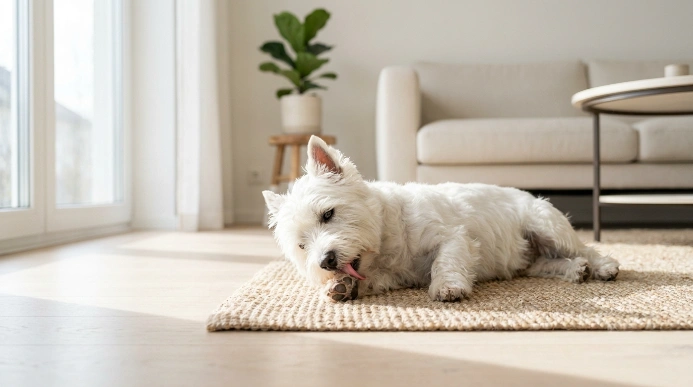
Your dog settles onto the floor, bends down, and starts licking a paw.
A few minutes later, they’re still doing it.
Then you notice it again that evening—and again the next morning.
So, why do dogs lick their paws?
Occasional paw licking can simply be part of normal grooming. Dogs investigate and clean themselves with their mouths, and a few licks after coming inside aren’t automatically a reason for concern.
Persistent licking is different.
When a dog repeatedly licks, chews, or bites its paws, there may be something making the area itchy, painful, or uncomfortable. Allergies are one possibility, but so are parasites, infections, injuries, foreign objects, and behavioral causes.
The paws themselves can provide useful clues, but don’t assume every licking dog has the same problem.
Here’s how to tell when paw licking deserves a closer look.
Is It Normal for Dogs to Lick Their Paws?
Sometimes.
A dog might briefly lick its feet after walking through wet grass, coming indoors, or simply while grooming.
What matters is frequency and intensity.
Pay more attention if your dog:
- Licks the same paw repeatedly
- Chews between the toes
- Interrupts sleep or play to lick
- Has red or swollen paws
- Develops hair loss
- Limp or avoids putting weight on a paw
- Has an unusual odor around the feet
- Makes the skin wet or raw
- Suddenly begins licking much more than usual
Persistent paw licking often overlaps with the broader problem of dog itchy skin. Allergies, parasites and secondary skin infections can affect much more than one part of the body, so check whether your dog is also scratching their ears, belly, face, or other areas.
1. Environmental Allergies
Allergies are one of the major possibilities when several paws are persistently itchy.
Dogs can develop reactions to environmental substances such as pollen, mold, dust mites, and other allergens.
Canine atopic dermatitis is a chronic allergic skin condition, and the feet are among the areas that can become affected.
Cornell University’s veterinary allergy guidance notes that allergic skin disease can cause pets to rub, scratch and lick their skin, potentially leading to further irritation and infection. It also identifies the spaces between the toes as one of the places where allergic rashes may appear.
Imagine a dog that seems comfortable throughout winter but starts licking all four feet every spring.
That pattern is worth mentioning to your veterinarian.
Look for other clues such as:
- Seasonal itching
- Red skin between the toes
- Ear problems
- Face rubbing
- Belly irritation
- General scratching
But don’t diagnose an environmental allergy based on paw licking alone. Several other conditions can look remarkably similar.
2. Something Is Stuck in the Paw
If licking starts suddenly and affects only one paw, inspect it carefully.
Dogs walk barefoot through everything.
A small object or irritated area can quickly become uncomfortable enough to cause repeated licking.
Possible problems include:
- Grass seeds
- Small thorns
- Splinters
- Burrs
- Tiny stones
- Cuts
- Cracked pads
- Insect stings
- Irritation between the toes
Gently examine the top and bottom of the paw and look between the toes.
Compare it with the opposite paw.
Is there swelling?
Is one area warmer?
Does your dog pull away when you touch a particular spot?
If an object is deeply embedded, the paw is painful, or you can’t clearly identify what’s wrong, don’t start digging around with tweezers. A veterinarian can examine the area safely and determine whether treatment is needed.
3. Hot Pavement or Surface Irritation
A dog’s paw pads are durable, but they’re not indestructible.
Hot asphalt, concrete, artificial surfaces, rough ground, ice, road salt, lawn chemicals, and other environmental exposures can irritate or damage paws.
Hot pavement is particularly easy to underestimate.
A VCA veterinary resource warns that surfaces including asphalt, concrete, gravel and artificial grass can become hot enough in direct sunlight to burn paw pads.
After a walk, you may notice your dog:
- Licking the pads
- Walking differently
- Holding up a foot
- Avoiding hard surfaces
- Showing tenderness
- Developing visibly damaged pads
Prevention is much better than waiting for sore paws.
During hot weather, choose cooler times of day for walks and be cautious about surfaces that have been sitting in direct sunlight.
Likewise, after winter walks or exposure to potentially irritating substances, inspect and clean your dog’s paws appropriately.
4. Fleas, Mites, or Other Parasites
Parasites can make dogs intensely itchy.
Fleas often cause itching around other parts of the body, but an itchy dog may lick and chew multiple areas, including its legs and feet.
Mites and other skin parasites can also produce irritation.
This is why focusing exclusively on the paw can sometimes be misleading.
If your dog is licking their feet and scratching elsewhere, look at the bigger picture.
Our guide to dog itchy skin and its common causes explains how fleas, mites, allergies and infections can produce overlapping symptoms.
A veterinarian may use skin examinations or diagnostic tests when parasites are suspected.
And remember: not seeing an obvious parasite doesn’t automatically rule one out.
5. Bacterial or Yeast Skin Problems
Persistent licking keeps skin moist.
Moist, inflamed skin can then become a better environment for secondary problems, which can make the dog even itchier.
You can end up with a frustrating cycle:
itching → licking → irritated skin → more discomfort → more licking
Possible signs of infection around the paws include:
- Redness
- Swelling
- Discoloration
- Unusual odor
- Greasy skin
- Crusting
- Discharge
- Tenderness
- Hair loss
Cornell’s veterinary allergy material specifically warns that repeated scratching and licking caused by allergies can damage the skin and contribute to infection.
This is also why simply stopping a dog from licking doesn’t necessarily solve the underlying problem.
If an infection has developed, the cause needs to be identified and treated appropriately.
Don’t apply leftover antibiotic cream, antifungal medication, essential oils, or another pet’s prescription without veterinary guidance.
The wrong treatment may do nothing—or make diagnosis more difficult.
6. Food Allergy
Food allergy gets blamed for an enormous amount of canine itching.
It can be responsible in some dogs, but you shouldn’t assume food is the culprit simply because your dog licks their paws.
Cornell identifies food allergy as one category of chronic allergic disease and notes that veterinarians may recommend a special diet when food allergy is suspected.
A proper food investigation is much more controlled than:
“Let’s try a different bag of dog food.”
Repeatedly switching foods can introduce new ingredients while making it harder to understand what your dog actually responds to.
If your veterinarian suspects food-related allergy, they may recommend a carefully controlled elimination diet.
That means treats, flavored supplements, chews, scraps and other foods can matter too.
Paw licking associated with food allergy may also occur alongside:
- Generalized itching
- Ear problems
- Skin irritation
- Gastrointestinal symptoms in some dogs
Speaking of digestive symptoms, persistent loose stools have their own wide range of potential causes. Our guide to dog diarrhea and when to call a veterinarian explains why food is only one possibility when digestive problems occur.
7. Pain, Stress, or Habitual Licking
Not every licking problem begins with itchy skin.
Pain can cause a dog to focus repeatedly on one area.
If licking is concentrated around a single foot or leg, particularly when accompanied by limping or reluctance to move, consider the possibility of discomfort beyond the skin itself.
Then there is behavior.
Some dogs lick themselves during periods of stress, frustration, or boredom. Repetitive behaviors can sometimes become established over time.
But this is where owners need to be careful.
It’s tempting to say:
“He’s just anxious.”
That conclusion should not come before checking for physical causes.
A dog with an embedded grass seed, painful nail, allergy, or skin infection shouldn’t have its licking dismissed as boredom.
If medical causes have been appropriately investigated and the licking appears connected to anxiety or another behavioral issue, then environmental enrichment and behavior work may become part of the solution.
For dogs showing broader anxiety specifically around being left alone, our dog separation anxiety guide covers the signs and gradual strategies used to help dogs become more comfortable with separation.
Why Are My Dog’s Paws Red Between the Toes?
Redness tells you the skin is inflamed, but it doesn’t tell you why.
Possible explanations include allergies, infection, excessive licking, parasites, contact irritation, injury, or a foreign object.
The pattern can sometimes help your veterinarian.
One red, painful paw that appeared suddenly creates a different list of possibilities from four chronically itchy feet accompanied by recurring ear trouble.
Pay attention to:
How many paws? One or several?
How long? Hours, days, or months?
Seasonal? Does it happen every spring?
Other symptoms? Ear itching, skin problems, limping, digestive issues?
These details are much more useful than simply reporting that “the paws are red.”
Why Are My Dog’s Paws Turning Brown?
Owners of light-colored dogs often notice rusty, reddish-brown staining where the dog repeatedly licks.
The staining can make the licking obvious, but it doesn’t identify its cause.
Don’t focus entirely on whitening the fur.
The important question remains:
Why is the dog licking enough to cause persistent staining?
If licking is frequent, investigate the underlying discomfort rather than treating it as a cosmetic problem.
What Should You Do When Your Dog Keeps Licking Their Paws?
Start with observation.
Examine All Four Paws
Don’t only inspect the paw your dog is currently licking.
Check:
- Pads
- Nails
- Between the toes
- Top of each paw
- Surrounding fur
Look for asymmetry, swelling, wounds, redness, foreign material, broken nails, or discharge.
Think About What Changed
Did the problem begin after:
- A long hike?
- Walking on a hot day?
- Visiting a new park?
- Grooming?
- Using a new household cleaner?
- A seasonal weather change?
- Changing food?
Timing doesn’t prove causation, but it gives your veterinarian useful context.
Record the Pattern
Take clear photographs.
If the licking happens at predictable times, make a note.
Veterinary dermatology history forms specifically ask owners about where pets lick or chew, seasonal patterns, whether problems are worse indoors or outdoors, and associated symptoms because these details help with investigation.
A short video of the behavior may also be useful.
Should You Stop Your Dog From Licking?
If your dog is licking so aggressively that they’re damaging their skin, preventing further self-trauma can be important.
But simply blocking access to the paw isn’t the entire solution.
Think of it like turning off a fire alarm without checking why it went off.
Your veterinarian may recommend an appropriate protective strategy while the underlying problem is investigated.
Avoid tightly wrapping paws yourself unless you’ve been shown how to do it safely. Incorrect bandaging can create additional problems.
Can You Wash a Dog’s Itchy Paws?
Gentle cleaning may be useful after exposure to dirt or environmental irritants, but don’t turn the paw into a chemistry experiment.
Avoid applying:
- Essential oils
- Alcohol
- Undiluted antiseptics
- Human anti-itch creams
- Random medicated products
unless your veterinarian has specifically recommended them.
If allergies or infection are involved, your veterinarian may recommend an appropriate topical product and explain how frequently it should be used.
When Should You Call the Vet?
Arrange veterinary care when paw licking is persistent or when you notice:
- Significant redness
- Swelling
- Bleeding
- Open sores
- Discharge
- Strong odor
- Broken nails
- Limping
- Obvious pain
- Rapidly worsening symptoms
- A deeply embedded foreign object
- Repeated skin or ear problems
A dog that suddenly develops facial swelling, difficulty breathing, collapse, or another severe allergic reaction needs urgent veterinary attention.
How Can You Reduce Future Paw Problems?
You can’t prevent every itchy paw, but simple habits can help.
Inspect your dog’s feet regularly.
Keep nails appropriately maintained.
Be careful with hot walking surfaces.
Check paws after hikes and outdoor adventures.
Follow your veterinarian’s parasite-prevention recommendations.
Pay attention to recurring seasonal patterns.
And address persistent licking early instead of waiting until the skin becomes badly inflamed.
Most importantly, learn what’s normal for your individual dog.
A quick grooming lick is one thing.
Twenty minutes of relentless chewing every evening is another.
Frequently Asked Questions
Why does my dog lick their paws before sleeping?
Some dogs briefly groom themselves while settling down. But persistent nightly licking—especially with redness, odor or chewing—can indicate discomfort and deserves investigation.
Why does my dog only lick one paw?
A problem affecting one paw may raise suspicion of a local issue such as an injury, broken nail, foreign object, sting, irritation, or pain. Examine the paw gently and seek veterinary care if licking persists.
Does paw licking mean my dog has allergies?
Not automatically. Allergies are a common possibility, but parasites, infections, injuries, foreign objects, irritation, pain and behavioral causes can also contribute.
Should I change my dog’s food?
Don’t repeatedly change diets based solely on paw licking. If food allergy is genuinely suspected, ask your veterinarian about an appropriate diagnostic diet trial.
Can anxiety make dogs lick their paws?
Stress and anxiety may contribute to repetitive licking in some dogs, but physical causes should be considered first.
Final Thoughts
So, why do dogs lick their paws?
Sometimes the answer is simply normal grooming.
But when licking becomes persistent, intense, or focused on irritated skin, your dog may be communicating something more important.
Look for patterns rather than jumping to one diagnosis.
One suddenly painful paw may point you in a different direction than four chronically itchy paws. Seasonal licking may raise different questions from licking that began immediately after a long walk.
And don’t assume every itchy dog needs a new food.
Allergies, parasites, infections, injuries, environmental irritation and pain can all enter the picture.
Your goal isn’t merely to make your dog stop licking.
It’s to understand why they feel the need to lick in the first place.
Solve that problem, and you’re much closer to giving those paws genuine relief.
Continue reading more





[…] why our why dogs lick their paws guide should be considered alongside this […]
Comments are closed.