
Worms are one of those cat-health problems that can seem to appear out of nowhere. A cat may look perfectly normal while carrying an intestinal parasite, or the first clue may be something as noticeable as rice-like segments near the tail, diarrhea, vomiting, weight loss, or a swollen-looking belly.
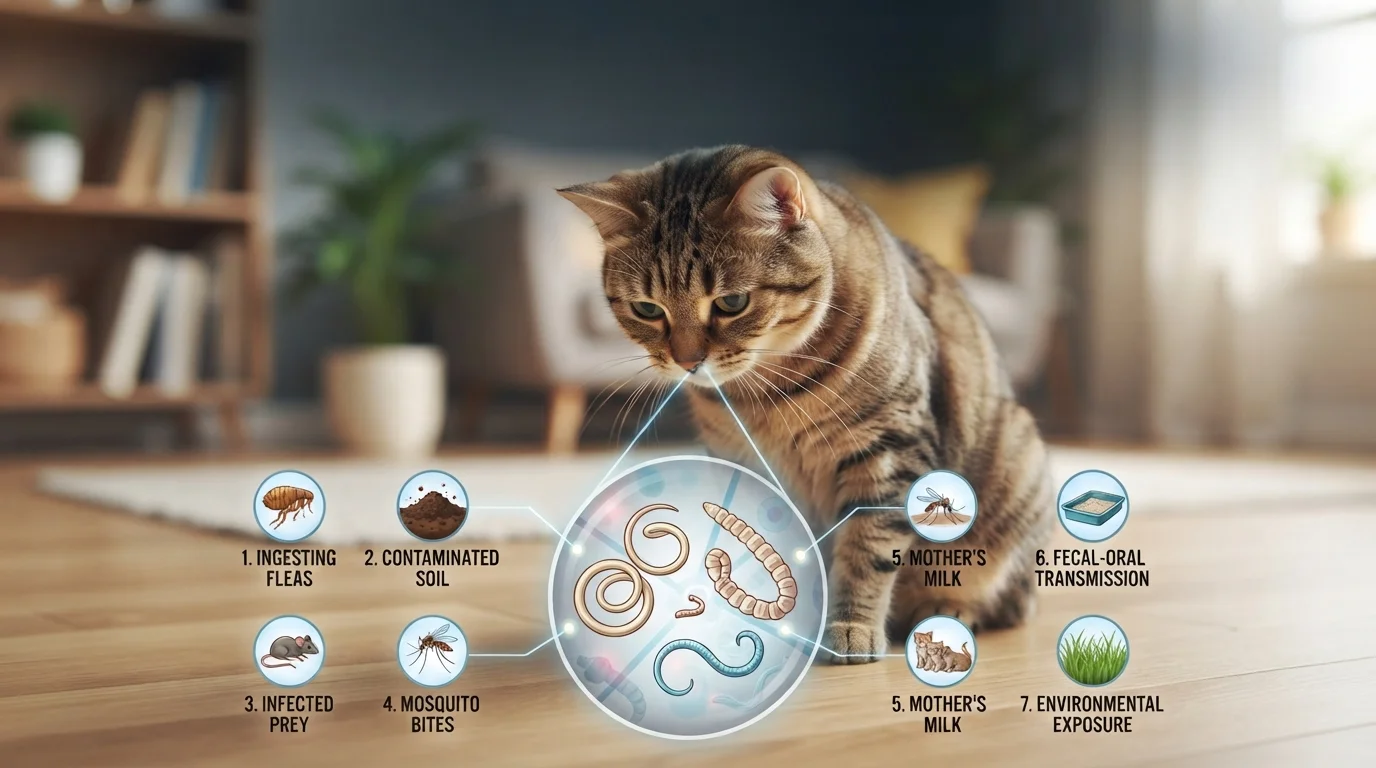
So, how do cats get worms? The answer depends on the parasite. Cats can pick up intestinal worms by ingesting eggs or larvae from contaminated environments, eating infected prey, swallowing infected fleas while grooming, or receiving certain parasites from their mother when they are kittens. Cornell University College of Veterinary Medicine notes that gastrointestinal parasites are common in cats and can cause signs ranging from digestive upset to anemia. Some feline parasites can also affect people. Cornell’s guide to gastrointestinal parasites in cats explains the major types and transmission routes.
7 Ways Cats Can Get Worms
1. Kittens can acquire certain worms from their mother
Young kittens have a special vulnerability to intestinal parasites. Certain roundworms can be passed from an infected mother to nursing kittens, which means a kitten can become infected very early in life even without roaming outdoors.
This is one reason kitten parasite prevention should not be treated as an afterthought. A kitten’s age, weight, environment, and health history all affect which parasite-control approach is appropriate.
If you have recently brought home a kitten, keep routine veterinary examinations on the schedule and ask about fecal testing and parasite prevention rather than waiting until worms become visible. Our kitten feeding guide also covers the broader care needs of young cats.
2. Cats can swallow parasite eggs from contaminated environments
Some intestinal worms spread through eggs that are passed in feces. A cat can encounter contaminated material in soil, litter areas, outdoor spaces, or other places where infected animals have defecated.
The exposure does not have to look dramatic. Cats groom themselves frequently, and contaminated material can eventually reach the mouth during normal grooming. Outdoor access increases the opportunities for exposure, but indoor living does not make parasite exposure impossible.
Prompt litter-box cleaning and good hand hygiene are simple ways to reduce environmental contamination. The Companion Animal Parasite Council recommends routine parasite testing and year-round parasite control based on veterinary guidance, lifestyle, and exposure risk. CAPC’s general parasite guidelines provide current recommendations for cats and dogs.
3. Hunting can expose cats to infected rodents and other prey
A cat’s hunting instincts can create another route to infection. Rodents and other prey animals can carry parasite larvae or other stages of parasites. When a cat catches and eats an infected animal, the parasite may complete part of its life cycle inside the cat.
This is particularly relevant for cats that roam outdoors or regularly hunt. Even a well-fed cat may chase and eat prey because hunting is instinctive behavior rather than simply a response to hunger.
Reducing hunting opportunities is therefore more than a wildlife-protection strategy. It can also reduce exposure to certain parasites and help lower the chance of reinfection after treatment.
4. Fleas can lead to tapeworm infections
Tapeworms have a different story from many roundworms. Cats can acquire certain tapeworms by swallowing infected fleas while grooming. This can happen quickly because grooming is such a normal part of feline behavior.
You may not even notice a flea problem before a tapeworm appears. Cornell notes that tapeworm segments can sometimes be seen around a cat’s tail and rectum or in the feces. Fresh segments can look like small grains of rice, while dried segments may resemble sesame seeds.
If a cat has a tapeworm infection associated with fleas, treating the worm without addressing the flea exposure can leave the door open to reinfection. Flea control therefore matters alongside veterinary treatment.
5. Grooming can turn contaminated fur into an exposure route
Cats spend a large part of their day grooming, which is normally an excellent self-care behavior. But grooming can also move parasite eggs or other infectious material from the coat or paws into the mouth.
This is one reason environmental hygiene matters even when you never see your cat eating feces or obvious contaminated material. A cat can encounter microscopic contamination and then ingest it while cleaning itself.
Regular litter-box maintenance, sensible cleaning of living areas, and appropriate parasite prevention can reduce this cycle. If several pets share the home, your veterinarian may also recommend a prevention plan that considers the household rather than looking at one animal in isolation.
6. Shared environments can increase exposure
Parasite exposure can occur anywhere infected fecal material or intermediate hosts are present. Multi-cat environments, shelters, boarding situations, outdoor communal areas, and homes with recurring flea problems can all create additional opportunities for transmission.
This does not mean every multi-cat household has a parasite problem. It simply means exposure history is useful information for your veterinarian. Tell them whether your cat goes outdoors, hunts, lives with other animals, has recently been adopted, or has experienced recurring fleas.
That information can help determine whether testing or preventive treatment should be adjusted.
7. Raw prey and uncooked foods can create additional parasite concerns
Feeding or allowing cats to consume raw animal tissues can introduce additional food-safety and parasite concerns. Cats that hunt and eat prey are naturally exposed to organisms that may be absent from a carefully prepared commercial diet.
This does not mean every raw food exposure results in worms, but it is an important part of the risk picture. Cornell recommends avoiding diets based on raw meats as part of parasite-control measures, while CAPC recommends feeding commercial or cooked food rather than raw diets.
What Types of Worms Do Cats Get?
“Worms” is a broad term. The appearance, transmission route, symptoms, and treatment can differ substantially between parasites.
- Roundworms: Common intestinal parasites that cats can acquire from eggs in the environment, infected prey, and, for some species, nursing from an infected mother.
- Hookworms: Small intestinal worms that can cause blood loss and anemia in significant infections. Cats can acquire them through ingestion or skin exposure to larvae, depending on the species.
- Tapeworms: Flat, segmented parasites. Certain feline tapeworms are commonly associated with infected fleas or prey animals.
- Other parasites: Cats can also develop less common worm infections and non-worm intestinal parasites, so symptoms alone cannot reliably identify the cause.
Some parasites discussed in feline medicine are not intestinal worms at all. For example, heartworm is a separate parasitic disease, so a general “dewormer” should never be assumed to protect against every parasite.
What Are the Signs of Worms in Cats?
Some infected cats show few or no obvious signs, especially when the infection is mild. When symptoms do occur, they can be nonspecific.
- Diarrhea or unusually soft stool
- Vomiting
- Weight loss
- Reduced appetite
- A dull or poor-looking coat
- A swollen or potbellied appearance, especially in kittens
- Worms or tapeworm segments visible in stool or around the anus
- Pale gums or other signs associated with anemia
- Coughing with certain parasite infections
These signs do not prove that worms are the cause. For example, persistent diarrhea can have many causes, as discussed in our guide to cat diarrhea. Likewise, vomiting can result from conditions unrelated to parasites, as explained in our guide to cat vomiting, so a symptom-based diagnosis is unreliable.
Can Indoor Cats Get Worms?
Yes. Indoor living can reduce exposure to some parasites, especially those associated with hunting and outdoor environments, but it does not eliminate risk.
Parasite exposure can still occur through contaminated material brought indoors, fleas, infected animals, or a cat’s previous exposure before adoption. Indoor cats can also develop health problems that look similar to parasite infections. If appetite changes are part of the picture, our guide to why a cat may stop eating can help you recognize another important warning sign.
That is why parasite prevention should be based on the individual cat’s lifestyle and veterinary risk assessment rather than a simple indoor-versus-outdoor rule.
How Are Worms Diagnosed?
A veterinarian may recommend a fecal examination when intestinal parasites are suspected. Depending on the parasite, additional testing may be useful because a single stool test does not detect every infection equally well.
Tapeworms are a good example. Cornell explains that routine microscopic fecal examination may miss some tapeworm infections because eggs are not consistently distributed in the stool. Visible segments can therefore provide an important diagnostic clue.
CAPC also recommends more frequent intestinal-parasite testing for kittens than for healthy adult cats, with testing frequency adjusted according to health, lifestyle, and exposure.
What Should You Do If You Think Your Cat Has Worms?
Start by contacting your veterinarian rather than choosing a dewormer at random. Different parasites require different treatments, and not every product works against every type of worm.
If possible, take note of what you have seen. A photograph of an unusual object in the stool or around your cat’s tail can sometimes be useful. Your veterinarian may also ask about appetite, vomiting, diarrhea, weight changes, outdoor access, hunting, fleas, recent adoption, and contact with other animals.
Do not give a dog dewormer to a cat unless a veterinarian specifically confirms that the product and dose are appropriate. The ASPCA warns that not all deworming products are safe for cats and recommends veterinary diagnosis and treatment rather than self-treatment.
If your cat is repeatedly vomiting, extremely weak, has pale gums, has significant bloody or black stool, is having trouble breathing, or appears seriously ill, seek veterinary care promptly. Kittens can become particularly vulnerable to dehydration, anemia, and complications from heavy parasite burdens. You can also review our guide to cat dental health and warning signs as part of your routine preventive-care checklist.
How Can You Help Prevent Worms?
You cannot remove every parasite risk, but several practical habits can reduce exposure:
- Keep litter boxes clean. Remove feces regularly so eggs and other infectious stages have less opportunity to accumulate.
- Maintain flea control. This is especially important because fleas can transmit certain tapeworms.
- Limit hunting. Indoor living reduces opportunities to ingest infected rodents and other prey.
- Discuss routine parasite prevention with your veterinarian. The appropriate product depends on your cat, location, age, lifestyle, and parasite risks.
- Use good hand hygiene. Wash your hands after handling litter or animal feces, particularly before eating.
- Keep kittens on an appropriate preventive plan. Young cats have different parasite risks and testing needs than healthy adults.
Good parasite control is not just about eliminating worms after they appear. Prevention, environmental hygiene, testing, and reducing exposure can all help break the cycle of reinfection.
FAQ: How Do Cats Get Worms?
Can cats get worms without going outside?
Yes. Indoor cats have fewer opportunities for some exposures, but parasites can still enter through fleas, contaminated material, other animals, or previous exposure. Indoor status alone does not rule out parasites.
Can cats get worms from their mother?
Yes. Certain roundworms can be transmitted from an infected mother to nursing kittens. This is one reason kitten parasite prevention is important.
Can fleas cause worms in cats?
Fleas can transmit certain tapeworms when a cat swallows an infected flea during grooming. Effective flea control is therefore an important part of preventing reinfection.
Can humans catch worms from cats?
Some feline intestinal parasites have zoonotic potential. Good litter hygiene, hand washing, prompt feces removal, and appropriate parasite control help reduce the risk. Children can be particularly vulnerable to some environmental exposures.
Should I deworm my cat if I see a worm?
Contact your veterinarian first. Identifying the parasite helps determine which treatment is appropriate, and some products do not work against every type of worm.
PetCareRoutine Perspective
Understanding how cats get worms makes prevention much easier. The main routes are not mysterious: infected mothers, contaminated environments, prey animals, fleas, grooming, and other exposure opportunities can all play a role depending on the parasite.
The most useful response is not to panic whenever you see a change in your cat’s stool. Instead, pay attention to persistent symptoms, keep the litter area clean, control fleas, reduce hunting exposure, and work with your veterinarian on testing and parasite prevention that fits your cat’s actual lifestyle.
And remember: a cat does not have to look sick to have a parasite. Routine preventive care is one of the simplest ways to catch problems before they become harder to manage.