

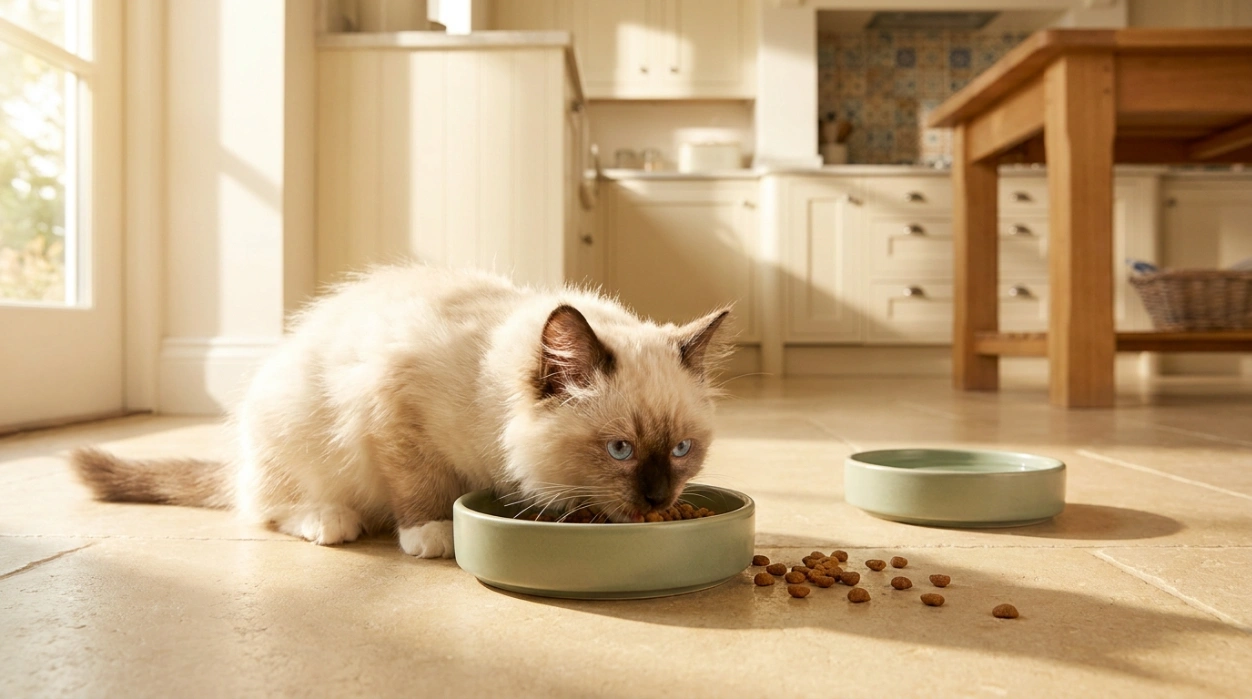
Kitten Feeding Guide: 7 Essential Tips for a Healthy, Thriving Kitten
Bringing home a kitten creates plenty of questions.
Where should they sleep? When do they need vaccinations? Why are they racing around the house at 2 a.m.?
But one of the most important questions is also one of the simplest:
What should I feed my kitten?
Kittens aren’t miniature adult cats when it comes to nutrition. Their bodies are developing rapidly, and that growth requires a diet designed specifically for this stage of life.
According to the Merck Veterinary Manual’s kitten-care guidance, growing kittens require extra calories, protein, fat, vitamins, and minerals and should receive a nutritionally balanced food formulated for kittens until they approach adulthood.
Getting kitten nutrition right doesn’t need to be complicated.
You need an appropriate food, sensible portions, a feeding schedule suited to your kitten’s age, fresh water, and regular monitoring of growth and body condition.
This kitten feeding guide explains the essentials.
1. Feed Food Formulated for Growing Kittens
Walk into a pet-food aisle and you’ll see dozens of options.
Adult cat food. Kitten food. Indoor formulas. Hairball formulas. Grain-free recipes. Wet food. Dry food.
Ignore the marketing claims for a moment and focus on something much more important:
Is the food nutritionally appropriate for growth?
Kittens have different nutritional demands from adult cats.
The Association of American Feed Control Officials (AAFCO) recognizes different nutritional life stages, including growth and adult maintenance. AAFCO explains that growing kittens require nutrients in different quantities and ratios from mature cats.
When shopping in the United States, examine the food’s nutritional adequacy statement.
You’re looking for a complete and balanced food appropriate for growth or an appropriate all-life-stages formulation.
“Complete and balanced” matters.
A product can look nutritious, contain beautiful ingredients, and have premium packaging without necessarily being designed to provide everything a growing kitten needs as its main diet.
Treats and supplemental foods aren’t substitutes for a nutritionally complete kitten diet.
Why can’t kittens just eat adult cat food?
Growing kittens require particularly nutrient-dense nutrition.
Merck notes that kittens need extra calories, fats, proteins, vitamins, and minerals to support rapid development.
Adult-maintenance diets are designed for a different nutritional job: maintaining an adult animal rather than building a rapidly developing one.
Occasionally stealing a mouthful from an adult cat’s bowl isn’t the same as being fed an adult-maintenance diet as the kitten’s primary food.
If you have both kittens and adult cats, separate feeding areas can make managing their different diets much easier.
2. Feed Young Kittens Several Times a Day
Kittens need substantial nutrition relative to their small size, but that doesn’t mean one enormous daily meal is ideal.
Smaller, more frequent meals work well during early growth.
Merck recommends feeding kittens under four months approximately three to four times per day, with feeding frequency gradually decreasing as they get older.
Cornell similarly explains that kittens need more food per pound of body weight than adults and says kittens up to around six months generally do well with three meals per day.
So a practical schedule might look like:
Young kitten: three or four measured meals spread throughout the day.
Older kitten: gradually transition toward fewer meals as growth progresses.
You don’t need to become obsessed with feeding at precisely the same minute every day.
Consistency matters more than perfection.
A regular schedule also gives you another advantage: it makes appetite changes easier to notice.
If your kitten normally races toward breakfast and suddenly refuses it, that’s useful information.
3. How Much Should You Feed a Kitten?
This is where universal internet charts become problematic.
There isn’t one correct number of cups, cans, or grams for every kitten.
Why?
Because foods have different calorie densities.
A quarter-cup of one dry kitten food may contain a very different number of calories from a quarter-cup of another. Wet foods vary too.
Age, weight, growth rate, activity, body condition, health, and whether your kitten has been spayed or neutered can also affect energy needs.
Start with the feeding instructions on your kitten food.
AAFCO requires complete and balanced foods to provide feeding directions appropriate to the intended life stage. However, AAFCO also emphasizes that these directions are guidelines and may need adjustment according to the individual animal’s activity and condition.
That last part matters.
Don’t interpret the number printed on a package as an unchangeable rule.
Monitor the kitten, not just the measuring cup
Your veterinarian can monitor your kitten’s:
- Weight
- Growth pattern
- Muscle development
- Body condition
- Overall health
and help determine whether the amount you’re feeding is appropriate.
Merck’s veterinary nutrition guidance notes that kitten growth is especially rapid during the first three to four months and then begins to slow.
A kitten’s nutritional needs therefore aren’t static.
The amount that worked several weeks ago may need adjusting as your kitten grows.
4. Wet Food or Dry Food: Which Is Better for Kittens?
This question creates far more arguments online than it needs to.
Both wet and dry commercial foods can provide appropriate nutrition if they’re complete, balanced, and formulated for the kitten’s life stage.
Each format has practical differences.
Wet kitten food
Wet food contains considerably more moisture than dry kibble.
That can contribute to your kitten’s overall water intake.
It’s also soft and often highly palatable.
Dry kitten food
Dry food is convenient to portion and store and can work well in appropriate feeding plans.
But don’t assume dry food automatically keeps a cat’s teeth clean enough to replace dental care. Likewise, don’t assume wet food is inherently nutritionally superior simply because it contains more water.
The nutritional adequacy of the specific diet matters.
Many owners choose to feed a combination of wet and dry kitten food.
That’s perfectly workable as long as you account for the calories from both rather than feeding the full recommended daily amount of each.
Otherwise, it’s surprisingly easy to double-feed.
Fresh water should always be available regardless of which type of food you choose. Merck recommends providing cats with multiple sources of fresh, clean water and notes that wet food can contribute additional moisture.
5. Don’t Give Kittens Cow’s Milk
Cartoons have done cat nutrition no favors.
The classic image of a kitten happily drinking a saucer of milk makes it seem like cow’s milk belongs naturally in a feline diet.
It doesn’t.
Merck specifically advises that milk isn’t a recommended treat for cats because it can cause digestive upset.
Once a kitten is properly weaned and eating complete kitten food, cow’s milk isn’t necessary.
What about very young orphaned kittens?
That’s a completely different situation.
A neonatal kitten who cannot nurse from its mother requires specialized care.
Don’t substitute ordinary cow’s milk.
Merck’s neonatal veterinary guidance states that commercially manufactured milk replacers are preferable to homemade formulas when maternal milk isn’t available. Very young kittens are also vulnerable to hypoglycemia, chilling, dehydration, and other serious problems.
If you’ve found an orphaned or apparently abandoned neonatal kitten, contact a veterinarian or experienced rescue organization promptly.
Feeding technique, formula, body temperature, frequency, toileting, and weight monitoring all matter.
6. Introduce New Foods Gradually
Kittens can develop digestive upset, and sudden food changes can sometimes make things worse.
If you’re switching from one appropriate kitten diet to another for routine reasons, gradually introducing the new food is generally easier on the gastrointestinal system.
A transition might involve progressively increasing the proportion of new food while decreasing the old food over several days.
But individual kittens differ.
If your veterinarian has prescribed a particular diet because your kitten is sick, follow those instructions instead of automatically using a standard transition schedule.
And pay attention to digestive symptoms.
Persistent diarrhea shouldn’t simply be blamed on “sensitive digestion.” Parasites, infections, dietary problems, and other conditions can affect kittens.
Our cat diarrhea guide and when to call a veterinarian explains the common causes and warning signs in more detail.
Likewise, recurring vomiting shouldn’t be considered a normal part of kittenhood. See our guide to cat vomiting and when to worry if your kitten is repeatedly bringing food or fluid back up.
7. Know What Kittens Shouldn’t Eat
A complete kitten diet should provide the overwhelming majority of your kitten’s nutrition.
That leaves very little reason to experiment with random human foods.
Avoid making a habit of feeding table scraps.
Some human foods are inappropriate, while others can be dangerous.
Raw meat
Raw diets are sometimes marketed as more “natural,” but natural doesn’t automatically mean safer.
Merck advises against feeding raw meat to cats because of health risks and recommends commercially formulated, nutritionally balanced diets instead.
Growing kittens are not the place for improvised nutritional experiments.
Dog food
A curious kitten stealing a bite from the dog’s bowl isn’t usually the same issue as intentionally feeding dog food as its regular diet.
Cats have species-specific nutritional requirements.
AAFCO highlights nutrients such as taurine and preformed vitamin A as examples of requirements that differ between cats and dogs.
Dog food therefore shouldn’t replace a complete feline diet.
Supplements
More nutrients aren’t automatically better.
If your kitten already eats a complete and balanced growth diet, don’t start adding calcium, vitamins, minerals, or other supplements because a social-media post claims they improve growth.
Merck notes that nutritional supplements aren’t routinely necessary and can be harmful in some circumstances.
Ask your veterinarian before supplementing.
What About Treats?
Treats can be useful for training and bonding.
They just shouldn’t quietly become a second diet.
Many treats are intended only for supplemental feeding rather than complete nutrition.
Merck’s veterinary nutrition guidance recommends keeping treats below about 10% of total daily calorie intake so they don’t displace essential nutrition from the complete diet.
For a tiny kitten, 10% isn’t much.
Break treats into very small pieces when possible.
Your kitten cares far more about receiving the reward than whether the treat was the size of a pea or a grape.
Should You Free-Feed a Kitten?
Free feeding means leaving food available throughout the day so the kitten can eat whenever it chooses.
Because kittens have high energy requirements, some veterinary nutrition guidance allows growing kittens to have relatively liberal access to food. Merck notes that growing kittens can be fed several times daily or, in appropriate circumstances, free choice.
However, free feeding isn’t automatically the best lifelong strategy.
Measured meals make it easier to know exactly how much your kitten eats and notice appetite changes.
They also make the eventual transition into adult portion control easier.
If several pets live together, free feeding creates another problem: you may have no idea which animal actually ate the food.
Discuss the best approach with your veterinarian based on your kitten’s growth and household.
How Do You Know Your Kitten Is Growing Properly?
Don’t judge growth simply by whether your kitten looks “big.”
Regular weighing is much more useful.
Your veterinary visits provide opportunities to monitor growth over time rather than relying on one isolated weight.
Healthy growth should be steady.
Unexpected weight loss, failure to gain appropriately, persistent digestive problems, a poor coat, low energy, or changes in appetite deserve attention.
Merck notes that kittens require frequent veterinary care during their early months, including vaccinations and parasite management.
Nutrition should be part of those conversations.
Bring the exact name of your kitten’s food—or a photo of the label—to the appointment if you’re unsure whether it’s appropriate.
When Should a Kitten Switch to Adult Cat Food?
Don’t switch simply because your kitten looks almost fully grown.
Merck recommends continuing an appropriate kitten diet until adulthood, generally around 9–12 months of age.
The exact timing can vary with the individual cat, so your veterinarian can help determine when the transition makes sense.
When the time comes, change gradually rather than replacing the entire diet overnight.
Adult cat food is generally less energy-dense because an adult cat no longer needs nutrition designed to support rapid growth.
Continuing to feed high-calorie growth food indefinitely can contribute to excess weight in some cats.
What If Your Kitten Won’t Eat?
A kitten refusing food deserves attention.
First, check the obvious:
Is the food fresh?
Has the recipe suddenly changed?
Is the feeding area quiet?
Is another pet preventing access?
But don’t assume a prolonged loss of appetite is merely pickiness.
Young kittens have less reserve than healthy adults, and very young kittens are especially vulnerable when they don’t receive adequate nutrition.
If your kitten suddenly refuses food, seems lethargic, vomits repeatedly, has diarrhea, loses weight, or otherwise seems unwell, contact your veterinarian promptly.
Create a Calm Feeding Environment
Where you feed your kitten matters too.
Cats often prefer eating in relatively quiet environments.
Merck recommends separate feeding areas in multi-pet homes to reduce competition and stress.
Keep food away from:
- Busy doorways
- Loud appliances
- Dog feeding areas
- Other pets that steal food
And don’t place every resource directly beside the litter box simply because it’s convenient for humans.
Give your kitten a comfortable feeding space where they can eat without constantly watching for interruptions.
Frequently Asked Questions
How many times a day should a kitten eat?
Young kittens generally benefit from multiple meals each day. Merck recommends three to four daily meals for kittens under four months, while Cornell says kittens up to around six months generally do well with three meals daily. Your veterinarian can tailor this to your kitten.
Can kittens eat adult cat food?
Adult-maintenance food isn’t designed to provide the same nutrient density required for growth. A kitten’s primary diet should be complete and balanced for growth or otherwise appropriately formulated for its life stage.
Is wet or dry food better for kittens?
Either can form part of a healthy diet if it’s complete and balanced for growth. Wet food provides additional moisture, while dry food can be convenient. Some owners successfully use both.
Can kittens drink milk?
Weaned kittens don’t need cow’s milk, and it can cause digestive upset. Unweaned orphaned kittens require an appropriate kitten milk replacer and specialized care.
When do kittens stop eating kitten food?
Many kittens transition to adult food around 9–12 months, although individual needs vary. Ask your veterinarian about the best timing for your cat.
PetCareRoutine Perspective
Feeding a kitten well isn’t about finding the fanciest package or following the latest pet-food trend.
It’s about meeting the nutritional demands of growth.
Choose a complete and balanced food appropriate for kittens. Feed young kittens several manageable meals. Use package directions as a starting point rather than an absolute rule. Monitor weight and body condition. Keep fresh water available. Limit treats and unnecessary extras.
And remember that your kitten’s needs will change surprisingly quickly.
The tiny animal that requires several meals today will eventually become an adult cat with very different energy requirements.
Good kitten nutrition builds the foundation.
Regular veterinary care, careful observation, and sensible feeding habits help make sure that foundation supports a healthy, thriving adult cat for years to come.
Continue reading more







[…] kitten feeding guide for healthy growth explains the wet-versus-dry distinction in more detail for growing […]
[…] kitten feeding guide · how much water should a cat drink · cat vomiting and when to call a […]
[…] the growth stage helps with feeding and weight monitoring. Our kitten feeding guide explains how appropriate nutrition supports […]
[…] have different nutritional requirements from adults, so owners of young cats can also review our kitten feeding guide for practical feeding […]
Comments are closed.