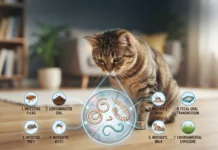

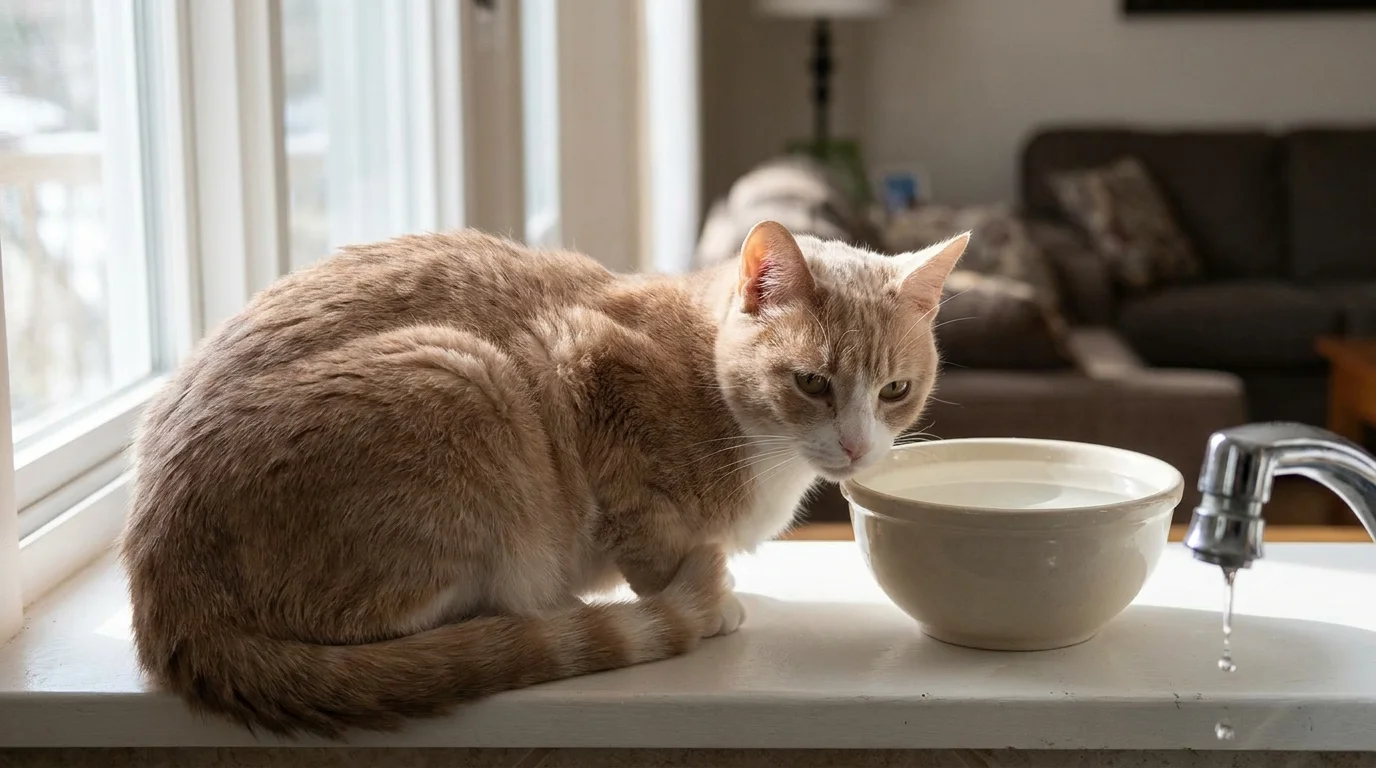
Cat Hydration: Most cat owners notice when the water bowl is empty. The harder thing to notice is when a cat is drinking differently from normal.
Cats are not famous for making a big performance out of getting thirsty. A cat may take a few drinks and walk away, drink more from a fountain than a bowl, or get a surprising amount of moisture from food. That makes hydration less obvious than it is with many dogs.
But there is a useful habit you can build at home: stop judging hydration by the water bowl alone. Look at the whole picture—water intake, food, litter-box habits, energy, appetite, and any changes that are unusual for your cat.
That matters because dehydration is often a consequence of another problem rather than a problem that appears by itself. Cornell University College of Veterinary Medicine notes that vomiting, diarrhea, kidney disease, diabetes, hyperthyroidism, poor appetite, dental problems, and limited access to water can all contribute to dehydration in cats. Cornell’s feline hydration guidance explains why identifying the underlying cause matters.
Start by learning what normal looks like for your cat
This is probably the least exciting piece of advice in a pet-care article, but it is one of the most useful: pay attention before there is a problem.
Notice where your cat normally drinks. Does the bowl need topping up every day, or hardly at all? Does your cat prefer the bathroom tap? Do they drink after meals? Do you have a cat who eats mostly wet food and rarely visits the water bowl?
Those details give you a baseline. A cat who has always been a quiet drinker is different from a cat who suddenly starts visiting the bowl repeatedly.
There is also no universal amount that every cat must visibly drink from a bowl. Cornell explains that water comes from both drinking and food, and wet food can contain a large amount of water. So a cat eating moisture-rich food may naturally drink less than a cat eating mostly dry food.
Five everyday clues that deserve your attention
1. The water bowl suddenly stays full
A full bowl is not automatically a problem. Some cats simply get much of their water from food. The important clue is a change from your cat’s normal pattern.
If your cat usually empties part of the bowl and suddenly stops drinking, look for other changes at the same time. Is the cat eating normally? Are they hiding? Are they vomiting? Is the litter box being used normally?
A sudden reduction in drinking can happen when a cat feels unwell, has mouth pain, feels nauseated, or simply encounters a water source they dislike. It can also occur alongside illnesses that need veterinary attention.
2. The litter box looks different
Your cat’s litter box can quietly tell you a lot.
Changes in urine volume or frequency are worth noticing, especially when they appear together with changes in drinking. A cat that is producing much less urine than usual, repeatedly entering the box without producing urine, or straining needs prompt veterinary attention. Urinary obstruction is an emergency, particularly in male cats.
On the other hand, noticeably increased drinking and urination can also signal conditions such as diabetes or kidney disease. In other words, both “less” and “much more” can be meaningful.
3. Your cat seems unusually flat
Sometimes the first clue is not the mouth or the water bowl. It is the cat.
A dehydrated or unwell cat may become quieter, sleep more, hide, move less, or simply seem different. Cats are experts at making illness look subtle, which is why a small behavior change can be worth recording rather than dismissing.
If low energy is happening alongside vomiting, diarrhea, or poor appetite, the combination is more concerning. Our guides to cat vomiting and cat diarrhea cover those symptoms in more detail.
4. The gums feel dry or sticky
A cat’s gums should normally feel moist. Dry or tacky gums can be a sign that something is wrong with hydration.
You can gently lift your cat’s lip and look at the gums, but do not turn a home check into a diagnosis. Cornell lists dry or tacky mucous membranes among physical indicators of dehydration and notes that other factors can affect hydration assessments.
5. The skin does not spring back as expected
You may have heard of the skin-tent test. It involves gently lifting a small fold of skin over the shoulders and watching how quickly it returns to normal.
It can provide a clue, but it is not a perfect home test. Cornell specifically notes that older cats can have reduced skin elasticity even when they are normally hydrated. That means a slow return should be considered alongside the rest of your cat’s condition, not used as a pass-or-fail test.
Why a cat may not drink enough
Sometimes the reason is surprisingly ordinary. The water bowl may be dirty. It may be beside the litter box. Another cat may guard the area. The bowl may be too narrow for a cat that dislikes its whiskers touching the sides. Or your cat may simply prefer moving water.
Other reasons are more important. Dental pain can make drinking uncomfortable. Nausea can reduce both eating and drinking. Vomiting and diarrhea remove fluid from the body. Kidney disease and diabetes can alter the balance between water intake and water loss.
This is why “my cat isn’t drinking much” is useful information but not a diagnosis.
Simple ways to make drinking easier
You do not need to turn your home into a cat café to encourage better hydration. Start with the least complicated changes and see what your cat actually prefers.
- Offer several water stations. Put clean water in quiet, easy-to-reach locations rather than making one bowl the only option.
- Wash bowls regularly. Fresh water in a dirty bowl is not much of an invitation.
- Experiment with bowl shape. Some cats prefer wide, shallow dishes.
- Try a fountain. Some cats are attracted to moving water, although not every cat cares.
- Consider moisture-rich food. Wet food can contribute substantially to daily water intake.
- Add water gradually to food if your cat accepts it. Do not let hydration experiments cause your cat to stop eating.
VCA Animal Hospitals recommends several of these approaches, including clean bowls, multiple water locations, wet food, and fountains, while emphasizing that individual preferences vary. VCA’s hydration tips for cats are a useful reference for building a practical setup.
The food bowl can be part of the hydration plan
One of the easiest mistakes is thinking that all water has to arrive through the water bowl.
Wet cat food contains a substantial amount of water, so cats eating it may naturally drink less. That does not mean they are dehydrated. It means you need to consider total fluid intake rather than watching one bowl.
For a cat that normally eats dry food, switching foods abruptly just to increase moisture is not necessarily a good idea. Food changes can upset the digestive system, and some cats will simply refuse a new texture.
Instead, discuss dietary changes with your veterinarian, particularly if your cat has kidney disease, urinary problems, diabetes, or another condition where hydration is especially important.
When “drink more water” is not enough
This is the part I would want every cat owner to remember.
If a cat is dehydrated because they are vomiting repeatedly, have significant diarrhea, have stopped eating, are weak, or have an underlying illness, putting out another bowl may not solve the problem.
Cornell notes that veterinary treatment can include intravenous or subcutaneous fluids, depending on the cat and the cause. The goal is not simply to add water; it is to restore hydration while finding out why the cat became dehydrated in the first place.
Do not force water into a weak or vomiting cat. There is a risk of aspiration, and a sick cat may need professional fluid support instead.
One hydration habit worth starting today
Once a week, take thirty seconds to look at your cat’s normal routine.
Check the water stations. Notice the litter box. Think about appetite and energy. Ask yourself whether anything has changed from the previous week.
You are not trying to diagnose your cat. You are building a mental snapshot of normal.
That snapshot becomes incredibly useful when something changes.
And if your cat is also eating poorly, our guide to why a cat may stop eating can help you recognize why appetite changes should not simply be ignored.
Questions cat owners often ask
How much water does a cat need each day?
There is no single visible drinking amount that applies to every cat because water also comes from food and varies with body size, diet, environment, activity, and health. Cornell gives a general estimate of about four ounces of water per five pounds of lean body weight per day from all sources.
Is it normal if my cat hardly drinks from the bowl?
It can be, particularly if your cat eats wet food. What matters is the overall hydration picture and whether the drinking pattern has changed.
Should I use a water fountain?
You can try one if your cat seems interested in running water. Some cats drink more from fountains, while others prefer a simple bowl. Clean the fountain regularly and make sure your cat always has another safe water option.
Can dehydration cause a cat to stop eating?
Illness can cause both poor appetite and dehydration, and dehydration can make a sick cat feel worse. If your cat is not eating and is also drinking less, contact your veterinarian rather than trying to solve the problem with water alone.
When is dehydration an emergency?
Seek prompt veterinary care if your cat is weak, collapsing, repeatedly vomiting, has severe diarrhea, cannot keep fluids down, has very dry or tacky gums, or shows signs of urinary obstruction such as straining with little or no urine.
PetCareRoutine Perspective
The healthiest hydration routine is usually the least dramatic one. Keep clean water available, make it easy for your cat to reach, pay attention to food moisture, and learn what normal drinking and litter-box habits look like for that individual cat.
But do not let a water fountain or a new bowl create false reassurance. A cat that suddenly drinks much less—or dramatically more—may be telling you something about their health. The water bowl is one clue. Your cat’s entire routine is the real picture.