

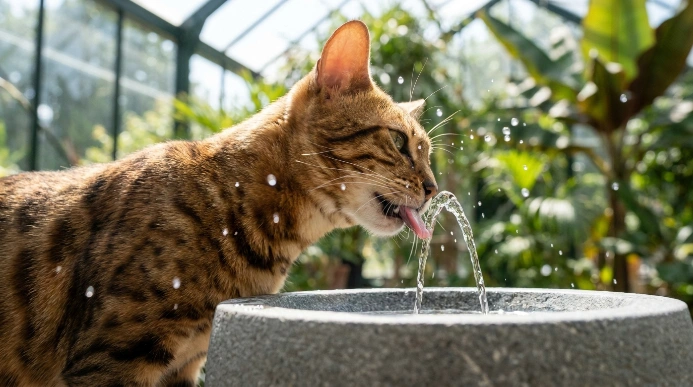
How Much Water Should a Cat Drink? 7 Essential Facts Every Owner Should Know
Cats aren’t usually enthusiastic drinkers.
You may fill your cat’s water bowl in the morning and come back hours later wondering whether the level has moved at all.
Then there are cats at the opposite extreme. You suddenly notice yours visiting the bowl several times a day, and now you’re wondering whether they’re drinking too much.
So, how much water should a cat drink?
There isn’t one exact amount that every healthy cat must drink directly from a bowl.
That’s because cats obtain water from more than one source. A cat eating mostly wet food may drink surprisingly little because much of their water comes from their meals. A cat eating dry food usually needs to obtain more water by drinking.
Body weight, diet, temperature, activity and health also affect water requirements.
The Merck Veterinary Manual’s current nutrition guidance gives a broad estimate of roughly 44–66 mL of total water per kilogram of body weight per day for mammals in comfortable environmental conditions, while emphasizing that individual requirements vary.
The important word is total.
That includes water in food as well as water your cat drinks.
Let’s make that easier to understand.
1. Your Cat’s Food Provides Water Too
Imagine two healthy cats of similar size.
One eats primarily dry kibble.
The other eats primarily canned food.
You probably shouldn’t expect them to empty their water bowls at the same rate.
Cornell University’s Feline Health Center reports that wet cat food is typically around 70–80% water.
Dry food contains far less moisture. Cornell’s feeding guidance puts typical dry-food moisture at around 6–10%.
So a cat eating wet food is essentially consuming water with every meal.
This explains why some wet-food-fed cats rarely seem interested in their water bowls despite maintaining normal hydration.
A dry-food-fed cat needs to compensate by drinking more.
This is also why simply asking:
“How many ounces did my cat drink today?”
doesn’t necessarily tell you whether their total water intake is appropriate.
You need to consider the diet too.
Our kitten feeding guide for healthy growth explains the wet-versus-dry distinction in more detail for growing kittens.
2. There Isn’t One Perfect Number for Every Cat
Using Merck’s broad 44–66 mL/kg estimate gives us a useful illustration.
Suppose your cat weighs 4 kg, or about 8.8 pounds.
Their estimated total daily water requirement might fall roughly around 176–264 mL under ordinary conditions.
But don’t turn that into a rigid home target.
Your cat’s actual needs can change with:
- Diet
- Environmental temperature
- Activity
- Age
- Pregnancy or nursing
- Illness
- Fluid loss
- Individual physiology
Merck specifically notes that water needs depend on factors including diet, environment, activity and health.
And remember: total water intake isn’t identical to bowl drinking.
If your cat consumes 200 grams of a food containing roughly 75% moisture, they’re already receiving approximately 150 mL of water from that food.
That doesn’t mean you should calculate every drop your healthy cat consumes.
Instead, understand your cat’s normal routine and pay attention when it changes.
3. Cats Should Always Have Access to Fresh Water
Regardless of whether your cat eats wet food, dry food or a combination, fresh drinking water should remain available.
Cornell recommends giving cats access to clean, fresh water at all times.
Merck goes further by recommending multiple bowls of fresh, clean water, cleaned daily.
This is a simple improvement for many households.
Instead of placing one bowl in the kitchen and assuming that’s enough, try offering water in several quiet, convenient locations.
For example:
- Kitchen
- Living area
- Upstairs hallway
- Quiet bedroom
- Safe outdoor enclosure, if applicable
This is particularly useful in larger homes and multi-cat households.
A cat shouldn’t need to pass another animal it dislikes just to reach its only water source.
Location matters.
4. Some Cats Prefer Running Water
You buy a beautiful ceramic bowl.
Your cat ignores it.
Then you turn on the bathroom faucet and suddenly they’re fascinated.
Sound familiar?
Some cats are attracted to moving water.
Merck suggests that a pet water fountain may encourage some cats to drink more, while Cornell’s recent feline heat-safety guidance similarly notes that running-water sources can encourage drinking in certain cats.
That doesn’t mean every cat needs a fountain.
Some prefer wide ceramic bowls.
Others like glasses.
Some prefer water placed away from food.
The Ohio State University Indoor Pet Initiative recommends offering alternatives because cats may have individual preferences for bowl shape, running water and even the taste of different water sources.
So rather than forcing one setup, observe your cat.
Try experimenting with:
Different bowl materials: Ceramic, glass or stainless steel.
Different shapes: Some cats appear more comfortable with wider bowls.
Different locations: Quiet areas may be more appealing.
A fountain: Particularly if your cat already seeks running taps.
Freshness: Replace water regularly and wash bowls.
The goal isn’t to create an elaborate hydration station worthy of a luxury hotel.
It’s to make drinking easy and appealing.
5. Wet Food Can Increase Water Intake
If you’re concerned that your cat doesn’t drink much, food is another part of the hydration picture.
Merck specifically notes that canned food can help cats obtain sufficient water and that this is one reason wet food is often recommended.
Cornell likewise points out that wet food’s high moisture content contributes significantly to water intake.
But don’t abruptly overhaul your cat’s diet solely because you haven’t seen them drink recently.
A diet should still be nutritionally complete and appropriate for the individual cat.
And dietary changes can themselves cause gastrointestinal upset in some animals.
If you’re considering changing food for a cat with urinary, kidney or other medical problems, discuss the decision with your veterinarian.
For kittens, any diet also needs to support growth. Our kitten feeding guide covers those nutritional requirements.
6. Know the Signs of Dehydration
Not getting enough water becomes more important when a cat is losing fluid.
Vomiting and diarrhea are obvious examples.
Our cat vomiting and when to worry and cat diarrhea and when to call a veterinarian guides explain why persistent gastrointestinal symptoms deserve attention.
A cat losing fluid through repeated vomiting or diarrhea may not be able to compensate adequately by drinking.
Potential signs associated with dehydration or illness can include:
- Lethargy
- Weakness
- Reduced appetite
- Dry or tacky gums
- Changes in behavior
- Reduced activity
- Sunken-looking eyes in more severe cases
Don’t rely entirely on home “skin tent” tests to decide whether your cat is safe.
Skin elasticity varies with age, body condition and other factors, and a sick cat needs evaluation based on more than one sign.
If your cat has repeated vomiting or diarrhea, refuses water, cannot keep water down, becomes weak, or otherwise appears unwell, contact your veterinarian.
Water is essential. Merck describes it as the most important nutrient and warns that inadequate water can become life-threatening within days.
7. Drinking Too Much Can Also Be a Warning Sign
Owners naturally worry about cats drinking too little.
But a cat suddenly drinking much more than usual deserves attention too.
You may notice:
- The water bowl empties unusually quickly
- Your cat visits water sources frequently
- They start drinking from sinks or toilets
- Larger urine clumps appear in the litter
- The litter box needs cleaning more often
- Your cat urinates more frequently
Increased thirst and increased urination can accompany several medical conditions.
One important example is chronic kidney disease.
Cornell’s feline chronic kidney disease guidance explains that cats with CKD lose the ability to concentrate urine effectively, which can lead to increased urination and compensatory drinking.
Other medical conditions can also increase thirst.
So don’t assume:
“Drinking lots of water must be healthy.”
A sudden change from your cat’s normal pattern is what matters.
If your cat begins drinking and urinating substantially more than usual, schedule a veterinary examination.
How Can You Tell How Much Your Cat Drinks?
You don’t need to measure water every day for a healthy cat.
But if your veterinarian asks you to monitor intake, you can make the process more structured.
Start with a measured amount of water.
At approximately the same time the next day, measure what’s left.
Account for obvious spills.
If you have multiple cats sharing bowls, this method won’t tell you which cat drank what.
Separate monitored water stations may be necessary under veterinary guidance.
And remember that direct drinking still doesn’t represent total water intake if the cat eats wet food.
Keep a simple record rather than relying on memory.
For example:
Monday: normal drinking, normal urine.
Tuesday: bowl noticeably lower, larger litter clumps.
Wednesday: drinking frequently, appetite reduced.
A pattern like that is much more useful to a veterinarian than:
“I think she’s been drinking a lot lately.”
Why Is My Cat Suddenly Drinking More Water?
Don’t panic, but don’t ignore it.
There are harmless possibilities.
The weather may be warmer.
You may have changed from wet food to dry food.
Your cat may be more active.
But increased thirst can also accompany disease.
Merck explicitly advises owners to contact their veterinarian when a cat appears to be drinking and urinating excessively.
Your veterinarian may ask about:
- Diet
- Appetite
- Weight changes
- Urination
- Vomiting
- Diarrhea
- Medications
- Activity
- Age
Depending on the findings, they may recommend urine testing, bloodwork or other diagnostics.
Why Isn’t My Cat Drinking Water?
Before assuming there’s a problem, consider diet.
A cat eating mostly wet food may simply obtain much of its water from meals.
Next, look at the setup.
Is the water:
- Fresh?
- Easy to access?
- In a clean bowl?
- Located somewhere quiet?
- Blocked by another pet?
Cats can be particular about resources.
Ohio State’s Indoor Pet Initiative recommends giving each cat access to food and water in a safe, quiet location and offering options that accommodate individual preferences.
But if your cat has stopped drinking and stopped eating, is vomiting, has diarrhea, or appears sick, don’t solve the problem by buying six new water bowls.
Call your veterinarian.
Water and Urinary Health
Hydration also matters to the urinary system.
Cats can develop several lower urinary tract problems, and adequate water availability is part of good everyday feline care.
Cornell recommends constant access to fresh water and notes the importance of water consumption when discussing prevention strategies for bladder and kidney stones.
However, don’t try to treat urinary symptoms simply by encouraging your cat to drink more.
A cat repeatedly entering the litter box but producing little or no urine may have a urinary obstruction, which can be a medical emergency—particularly in male cats.
Straining to urinate should not be confused with constipation or simply “not drinking enough.”
Seek veterinary care promptly.
How to Encourage Your Cat to Drink More
For a healthy cat that simply seems uninterested in the bowl, try making water more accessible rather than forcing them to drink.
You can:
- Place several bowls around the home
- Refresh the water regularly
- Wash bowls daily
- Experiment with bowl shapes
- Try ceramic, glass or stainless steel
- Offer a cat fountain
- Consider appropriate wet food
- Keep water in quiet locations
- Make sure another pet isn’t guarding the bowl
Avoid turning water consumption into a stressful interaction.
Don’t repeatedly carry your cat to the bowl or force water into their mouth unless a veterinarian has specifically instructed you to administer fluids.
Cats should be able to approach their resources comfortably.
Frequently Asked Questions
How much water should a cat drink per day?
A broad physiological estimate is around 44–66 mL of total water per kilogram of body weight daily, but individual needs vary considerably. Total water includes moisture in food, so wet-food-fed cats may drink substantially less directly from a bowl.
Is it normal for cats to barely drink water?
It can be, particularly for cats receiving substantial moisture from wet food. What matters is overall hydration and whether drinking behavior has changed from your cat’s normal pattern.
Is a cat water fountain better than a bowl?
Not universally. Some cats prefer moving water and may drink more from fountains, while others are perfectly happy with bowls. Offering options lets you learn your cat’s preference.
Should cats have water next to their food?
They can, but you don’t have to limit water to one location. Providing multiple clean water sources in safe, quiet areas can encourage access.
Why is my older cat suddenly drinking lots of water?
Increased thirst and urination can accompany medical problems, including kidney disease. A meaningful change in an older cat’s drinking habits warrants veterinary evaluation.
Does wet cat food provide enough water?
Wet food can contribute a substantial amount of water, but cats should still have unrestricted access to fresh drinking water.
PetCareRoutine Perspective
The best way to think about feline hydration isn’t:
“Did my cat drink exactly 200 mL today?”
It’s:
“Is my cat getting enough total water, and has anything changed?”
Diet makes a huge difference. A cat eating moisture-rich wet food may rarely visit the water bowl, while a dry-food-fed cat will generally need to drink more.
Make hydration easy.
Provide clean water every day. Offer several locations. Experiment with bowls or a fountain if your cat is particular. Consider the moisture content of their food.
Then learn what’s normal for your cat.
A sudden increase or decrease in drinking can sometimes tell you more than any generic online water calculator.
If that change occurs alongside altered urination, appetite loss, vomiting, diarrhea, weakness, weight loss or other signs of illness, involve your veterinarian.
Healthy hydration isn’t about forcing your cat to reach a perfect number. It’s about providing reliable access to water and noticing when their normal pattern changes.
Continue reading more





[…] kitten feeding guide · how much water should a cat drink · cat vomiting and when to call a […]
[…] If your cat suddenly seems permanently attached to the water bowl, read our guide on how much water a cat should drink. […]
[…] explaining why a cat may stop eating covers warning signs. Hydration also matters, and our guide to how much water a cat should drink explains how diet and health influence […]
Comments are closed.