
There is a particular cat habit that can make an ordinary evening feel strangely special: your cat settles beside you, starts purring, and begins pressing one front paw into the blanket. Then the other. Left, right, left, right. Before long, the sofa cushion—or your lap—has become a tiny bakery.
People call it making biscuits, pawing, or simply kneading. It is one of those behaviors that looks funny until you notice how relaxed your cat seems while doing it. But why do cats knead in the first place? The answer starts when they are kittens and becomes more interesting as they grow up.
First, what exactly is kneading?
Kneading is a rhythmic movement in which a cat alternates its front paws against a soft surface. Some cats use their claws gently; others push with the pads of their paws and barely extend the claws at all. A cat may knead a blanket, bed, stuffed toy, another cat, or a person’s lap.
There is no rule saying a cat has to knead. Some do it often, some only occasionally, and some barely do it at all. That difference is important: kneading is common, but it is not a behavior every healthy cat must display.
The behavior begins with kittenhood
The clearest part of the story happens early in life. Nursing kittens knead around their mother’s mammary area while feeding. Veterinary behavior resources describe this as a juvenile behavior associated with nursing and milk flow. VCA Animal Hospitals explains that adult kneading can be a carryover from this kitten behavior.
That does not mean an adult cat is literally trying to nurse from your blanket. Instead, the movement may have become linked with the comfort and security of kittenhood. This is one reason a cat may knead when it is settling down for a nap or receiving affection.
So, why do cats knead as adults?
1. It may be part of their comfort routine
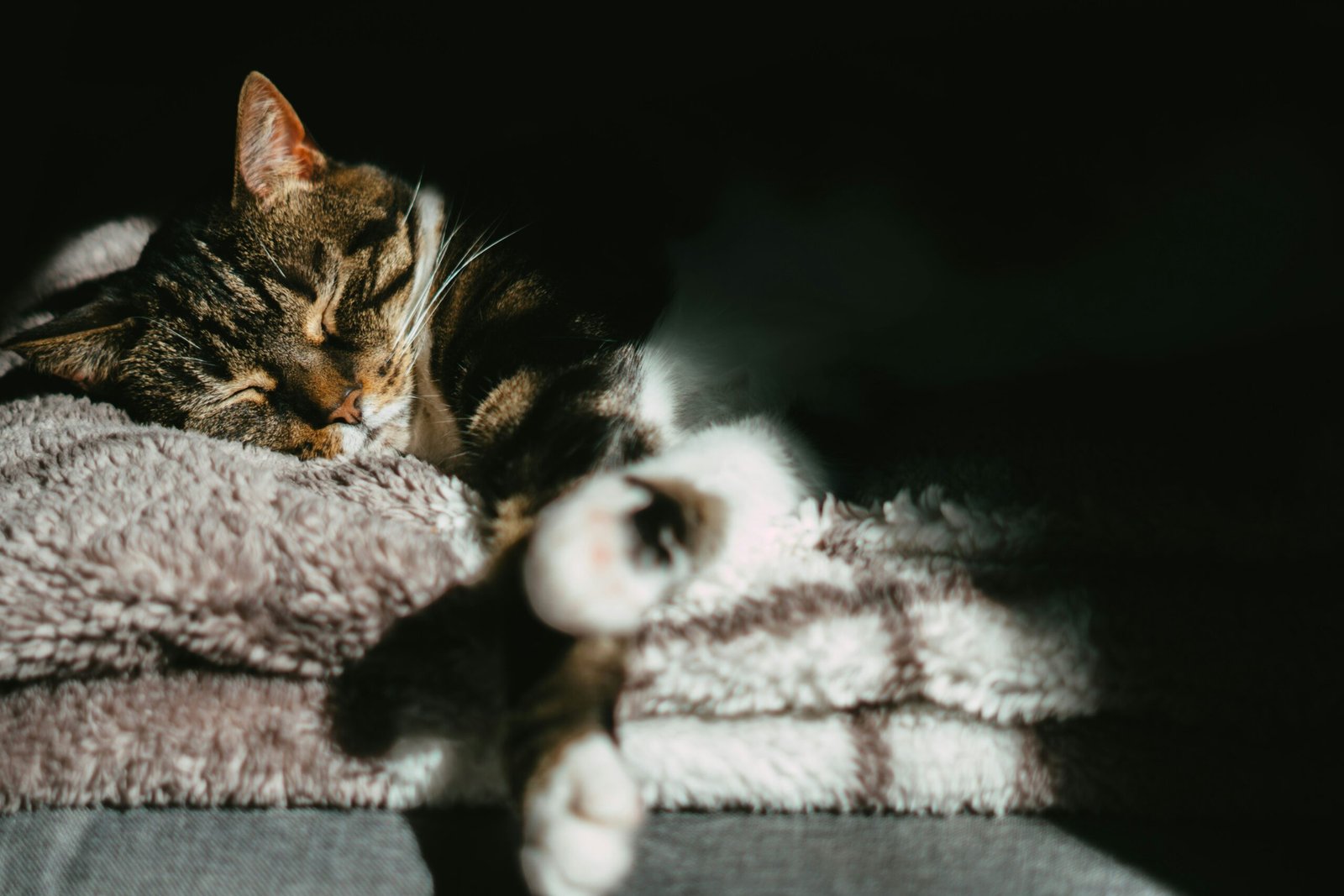
Watch what happens immediately before and after kneading. A cat may climb onto a favorite blanket, circle once or twice, knead for a few seconds, purr, and then curl up. The kneading is part of the whole settling-down sequence.
Cats Protection describes adult kneading as a retained juvenile behavior and notes that it is often associated with contentment. That makes the sleepy blanket ritual one of the simplest explanations: your cat may simply be getting comfortable.
2. Your cat may associate you with safety
When a cat kneads your lap, it can feel like a surprisingly personal compliment. We should be careful not to translate every cat behavior into a human emotion, but kneading on a trusted person can happen in a relaxed context.
If your cat chooses your lap, purrs, relaxes its body, and settles beside you afterward, the bigger picture matters more than the paw movement itself. Cats Protection also describes kneading as a behavior commonly seen when cats are content.
It is worth remembering that cats show affection in different ways. A cat that rarely sits on a lap may still be deeply attached to you. If you want to learn another subtle feline social signal, our guide to cat sleeping habits explains why rest and comfort behaviors can reveal useful clues about your cat’s routine.
3. Paw scent may play a role
Cats have scent glands in their paws, and VCA notes that kneading may contribute to territorial marking. In a home environment, that does not necessarily mean your cat is trying to claim you in some dramatic way. Scent is simply one of the ways cats interact with their surroundings.
This may help explain why a cat repeatedly kneads a particular blanket, bed, or favorite resting place. The object is already familiar, comfortable, and part of the cat’s normal environment.
4. It may be part of preparing a resting place
There is another plausible explanation rooted in instinct. Cats in natural environments had to choose and prepare places to rest. VCA notes that kneading may be related to making a resting spot more comfortable, even though today’s indoor cat has a manufactured bed waiting nearby.
You may see this in a particularly obvious way when a cat paws at a blanket before settling down. The blanket does not need fixing, of course. Your cat’s internal routine simply has not received the memo.
What about kneading with claws?
This is where a sweet behavior can become surprisingly painful. Some cats knead with their claws extended, and a soft human lap can provide very little protection.
Do not punish your cat for it. Instead, place a thick blanket between your skin and those enthusiastic paws. You can also keep your cat’s claws appropriately trimmed if your veterinarian or groomer has shown you how to do it safely. If grooming is something your cat dislikes, our guide to building a calmer cat grooming routine may help.
Another useful option is to give your cat a designated kneading surface—a fleece blanket or soft bed that can become the preferred target. The goal is redirection, not making the cat feel that a normal behavior is forbidden.
When kneading looks different, pay attention
Normal kneading is usually easy to recognize because it fits your cat’s established routine. The behavior may become more interesting from a health perspective when it appears alongside other changes.
For example, imagine a cat that has always kneaded on the sofa before sleeping. One week, the same cat begins hiding under the bed, eating less, and repeatedly kneading in that hiding place. The kneading itself is not proof of illness. The change in the overall pattern is what deserves attention.
VCA notes that cats may sometimes purr and knead as a form of self-soothing when they are not feeling well. Cats Protection likewise advises veterinary attention when a cat develops behavior that is out of character. If your cat’s appetite has changed too, our guide to what it means when a cat stops eating can help you recognize why that change should not be ignored.
Look for the full picture: hiding, reduced appetite, vomiting, diarrhea, unusual aggression, reluctance to move, changes in litter-box habits, or other sudden behavioral changes can all be more important than the kneading itself.
Does kneading mean my cat is happy?
Often, it can be part of a relaxed and comfortable routine—but it is better not to treat kneading as a happiness meter.
A cat’s body language is a collection of signals. Soft posture, relaxed ears, normal appetite, comfortable movement, and a willingness to settle can all support the interpretation that your cat is comfortable. A single behavior on its own is rarely enough to tell the whole story.
That distinction matters because cats can sometimes use familiar behaviors for self-soothing. If your cat suddenly changes where, when, or how intensely it kneads, take a moment to observe what else has changed.
A small habit worth watching
One of the easiest ways to understand your cat is to notice patterns before you need to worry about them. You do not need a spreadsheet. Just pay attention to what your cat normally does when it is comfortable.
Where does your cat knead? What surface does it choose? Does it purr? Does it settle afterward? Does it knead only before sleeping, or at other times too? Has anything about the routine changed?
Those observations can tell you much more than a generic list of reasons cats knead. They give you a baseline for your individual cat.
Frequently Asked Questions
Why do cats knead blankets?
Blankets are soft and provide a surface that is easy for cats to press their paws into. Kneading may be part of a comfort or settling routine that traces back to kittenhood.
Why does my cat knead me?
Your cat may knead you because it feels comfortable and relaxed around you. The behavior can also be associated with familiar scent, comfort, and an established bedtime or resting routine.
Why does my cat knead and purr?
Kneading and purring often occur together when a cat is relaxed. However, purring and kneading can also be self-soothing behaviors, so sudden changes should be considered alongside other symptoms or behavior changes.
Should I stop my cat from kneading?
Usually there is no reason to stop normal kneading. If claws are painful or the behavior damages furniture, redirect your cat to a soft designated surface rather than punishing your cat.
When should I worry about kneading?
Be more attentive when kneading suddenly becomes very different or appears alongside hiding, appetite loss, vomiting, diarrhea, pain, mobility changes, or other unusual behavior. A veterinarian can help determine whether a medical issue is contributing.
PetCareRoutine Perspective
The funny thing about kneading is that the behavior looks much more mysterious than it probably feels to the cat. Your cat is not sitting there trying to solve a puzzle for you. It is following a familiar little routine built from instinct, comfort, and experience.
So the next time those paws start working on your blanket—or unfortunately, your bare leg—you do not need to decode every movement. Watch the whole cat instead. If the body is relaxed, the routine is familiar, and everything else is normal, you are probably witnessing one of the harmless quirks that makes living with a cat so entertaining.
If the behavior changes dramatically, however, do not dismiss the change simply because kneading is normally cute. Your cat’s usual behavior is your best reference point, and your veterinarian is the right person to involve when that baseline suddenly shifts.
Sources
VCA Animal Hospitals: Why Do Cats Knead?
Cats Protection: Why Do Cats Knead?
Cats Protection: Managing Cat Behaviour