

Dog Grooming at Home: 9 Essential Tips for a Healthy, Beautiful Dog
Dog grooming can look deceptively simple.
Brush the coat. Give your dog a bath. Trim the nails. Done.
But good grooming isn’t simply about making your dog look clean for photographs. Regular grooming helps maintain the coat, keeps nails manageable, gives you an opportunity to examine the skin and paws, and can help you notice unusual changes before they become easy to overlook.
The challenge is that there isn’t one grooming routine that works for every dog.
A short-coated Boxer and a long-haired Shih Tzu have very different requirements. A dog that spends weekends swimming and hiking may need different care from a mostly indoor companion.
The American Kennel Club’s veterinary-reviewed home dog grooming guidance emphasizes that grooming frequency depends heavily on breed and coat type.
Instead of trying to follow a universal schedule, learn what your individual dog’s coat, skin, ears, paws, and nails need.
Here are nine essential principles that make dog grooming at home safer and easier.
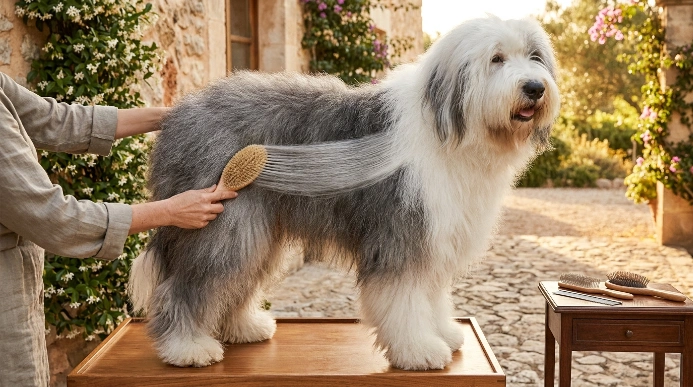
1. Brush Your Dog Regularly
Brushing is one of the simplest grooming habits you can establish.
It removes loose hair, dirt and debris while helping you find tangles before they turn into serious mats.
How frequently should you brush?
That depends heavily on the coat.
A short-haired dog may require relatively simple maintenance, while long, curly, silky, or dense double coats can require considerably more attention.
Merck Veterinary Manual recommends regular brushing to remove loose hair and prevent mats, noting that matting is especially important to prevent in dogs with thick or long fur because it can irritate the skin and contribute to infection.
Choose the right brush
Don’t simply buy the first brush labeled “dog brush.”
Different coats may benefit from:
- Bristle brushes
- Slicker brushes
- Pin brushes
- Undercoat tools
- Combs
- Deshedding tools
A professional groomer can help you identify what’s appropriate for your dog’s particular coat.
Brush gently and work systematically rather than repeatedly dragging a tool through tangled fur.
Grooming shouldn’t hurt.
If your dog suddenly reacts when you brush one particular area, stop and inspect it. There may be a mat, skin irritation, wound, lump, tick, or another painful problem underneath the coat.
2. Don’t Ignore Mats
A mat isn’t simply an unattractive knot.
Tightly matted fur can pull on the skin, trap moisture and debris, and make examining the skin underneath difficult.
Severe matting can become painful.
This is especially important around areas where friction occurs, including:
- Behind the ears
- Under the collar
- Armpits
- Legs
- Tail
- Belly
Regular brushing is much easier than trying to deal with severe matting later.
And here’s an important safety rule:
Don’t grab household scissors and cut a tight mat away from the skin.
Dogs can move suddenly, and tightly matted fur can pull skin upward into places where you don’t realize you’re cutting.
Both Merck and AKC guidance caution against using scissors to remove mats because of the risk of accidentally cutting the dog’s skin.
If a mat is tight against the skin or extensive, let a professional groomer or veterinary professional handle it safely.
3. Bathe Your Dog When They Actually Need It
Dogs need baths.
They don’t necessarily need them as frequently as humans shower.
How often your dog needs bathing depends on their:
- Coat
- Skin
- Lifestyle
- Activity
- Environment
- Medical needs
A dog that rolls in mud every weekend obviously has different bathing needs from an indoor dog with a clean, short coat.
Merck’s routine-care guidance suggests bathing with pet shampoo roughly monthly depending on season and whenever the coat becomes dirty or develops an unpleasant odor.
AKC similarly cautions that overly frequent bathing can strip natural oils and leave the coat dry.
Use shampoo made for dogs
Your favorite human shampoo isn’t automatically appropriate for your dog.
Use a dog-specific product suited to your pet’s coat and skin.
If your dog has allergies, recurrent infections, severe itching or another skin condition, ask your veterinarian before experimenting with different shampoos.
Medicated shampoos are treatments, not simply stronger versions of normal shampoo.
Merck notes that medicated bathing schedules for skin disease can differ dramatically from ordinary grooming schedules and should be based on the condition being treated.
Our dog itchy skin and its common causes guide explains why persistent itching shouldn’t simply be treated with repeated baths.
4. Make Bath Time Comfortable
Preparation can make a huge difference.
Before turning on the water, have everything ready:
- Dog shampoo
- Towels
- Non-slip surface
- Brush or comb
- Treats if appropriate
Use comfortably warm water rather than very hot water.
Wet the coat thoroughly, apply the appropriate dog shampoo, and massage gently through the coat without aggressively scrubbing irritated skin.
Avoid getting shampoo into the eyes and ears.
Then rinse thoroughly.
This step is easy to rush.
Shampoo residue left in the coat can contribute to irritation, so continue rinsing until you’re confident the product is gone.
Dry your dog properly afterward, particularly in colder conditions and around areas where moisture can remain trapped.
AKC specifically advises against bathing dogs outdoors in cold temperatures because of the risk of a dangerous drop in body temperature.
Make the experience calm rather than turning bath day into a wrestling match.
5. Keep Your Dog’s Nails Under Control
Nail trimming isn’t cosmetic.
Long nails can affect how a dog places their feet and walks.
VCA explains that excessively long nails may interfere with normal foot placement and can potentially contribute to structural changes in the foot. Long nails are also more vulnerable to snagging and painful breakage.
One useful clue is sound.
If your dog’s nails constantly click against hard flooring, they may be getting too long.
Many dogs need nail care approximately every three to four weeks, although the actual schedule varies. Dogs walking frequently on abrasive surfaces may naturally wear their nails more than less-active dogs.
Understand the quick
Inside each nail is living tissue containing blood vessels and nerves commonly referred to as the quick.
Cutting into it hurts and causes bleeding.
The quick can be easier to identify in light-colored nails and much more difficult to see in dark nails.
If you don’t know how to identify a safe trimming point, have your veterinarian or professional groomer demonstrate before attempting it yourself.
You don’t need to prove that you can groom every part of your dog alone.
Sometimes professional help is the safer choice.
6. Don’t Force a Dog Who Fears Nail Trimming
Some dogs see nail clippers and immediately disappear.
Forcing them into position may get the nails shortened once, but it can make the next attempt much harder.
VCA’s veterinary behavior guidance recommends gradually teaching dogs to accept nail handling, beginning with small steps and pairing comfortable interactions with something the dog enjoys. If a dog shows fearful or reluctant body language, continuing can worsen that fear.
Start with something simple.
Touch the shoulder.
Reward calmness.
Gradually move down the leg.
Touch the paw.
Introduce the clipper without cutting.
Eventually trim one nail.
There is no rule saying all 18 nails must be completed in one session.
Short, positive sessions are often better than one stressful battle.
Watch for signs such as:
- Trembling
- Pulling away
- Panting
- Growling
- Snapping
- Excessive drooling
- Trying to escape
A growl isn’t bad behavior that needs punishment during grooming. It’s communication that the dog is uncomfortable.
VCA specifically recommends avoiding punishment or forced restraint when dogs communicate fear during nail care.
For severe grooming fear, talk with your veterinarian.
7. Check the Ears—But Don’t Overclean Them
Grooming time is a convenient opportunity to look at your dog’s ears.
You’re checking for unusual:
- Redness
- Swelling
- Discharge
- Debris
- Odor
- Sensitivity
Some dogs need more ear maintenance than others, particularly depending on their anatomy, skin health and lifestyle.
Dogs that swim frequently may require additional attention because moisture can remain around the ears.
But ear cleaning should not mean aggressively inserting cotton swabs or other objects deep into the ear canal.
AKC recommends cleaning the outer ear carefully and seeking veterinary care when there is marked redness, swelling, discharge, debris, or an unpleasant yeasty odor.
If the ear appears painful or infected, don’t keep pouring random cleaners into it.
An ear problem may require veterinary diagnosis and appropriate treatment.
8. Inspect the Paws While Grooming
The paws are easy to overlook because they’re underneath your dog.
Make paw inspection part of your grooming routine.
Check:
- Paw pads
- Between the toes
- Nails
- Dewclaws
- Fur around the pads
Look for cracks, cuts, swelling, redness, foreign material, or anything else unusual.
Long fur between paw pads can also collect debris or become matted in some dogs.
AKC recommends checking paw pads regularly for injuries and notes that excessive hair between the toes may need careful trimming.
But don’t immediately reach for scissors.
Trimming around paws requires precision because dogs can move without warning. Ask a groomer or veterinary professional to demonstrate safe technique if you’re inexperienced.
And if your dog constantly licks or chews their feet, grooming may not be the real solution.
Our why dogs lick their paws guide explains how allergies, irritation, infection, pain and other problems can drive repeated paw licking.
9. Use Grooming as a Mini Health Check
This may be the most valuable habit of all.
Every grooming session gives you an opportunity to examine your dog closely.
While brushing, bathing, or drying, pay attention to anything that wasn’t there before.
Look for:
- Lumps
- Bumps
- Skin redness
- Bald patches
- Scabs
- Parasites
- Wounds
- Unusual odor
- Tender areas
- Changes in coat quality
You’re not trying to diagnose diseases yourself.
You’re learning your dog’s normal condition.
If you’ve brushed your dog regularly for two years, you’re much more likely to notice when a new lump appears behind the shoulder.
If you routinely inspect the paws, unusual swelling between the toes becomes easier to spot.
If you’re familiar with the normal smell and appearance of your dog’s ears, a sudden change stands out.
That’s one reason grooming is more than cosmetic maintenance.
It creates regular hands-on observation.
How Often Should You Groom Your Dog?
There’s no universal schedule.
A simple starting framework is:
Brushing: Based on coat type; long or mat-prone coats may require very frequent brushing.
Bathing: As needed according to coat, lifestyle, dirt, odor and veterinary recommendations.
Nails: Check frequently and trim before they become excessively long; many dogs need attention every few weeks.
Ears: Inspect regularly and clean according to your dog’s individual needs and veterinary advice.
Paws: Check routinely, especially after outdoor activity.
Professional grooming schedules vary even more.
A Poodle with a maintained haircut has different requirements from a Labrador Retriever.
Ask a groomer familiar with your dog’s coat type to help establish a realistic routine.
When Should You Use a Professional Groomer?
Home grooming is excellent for routine maintenance, but some jobs are better handled professionally.
Consider a professional groomer when your dog:
- Has a coat requiring specialized clipping
- Develops significant matting
- Needs breed-specific grooming
- Has difficult-to-maintain fur
- Requires trimming in sensitive areas
- Is difficult for you to handle safely
Veterinary help is more appropriate when you discover:
- Painful skin
- Open wounds
- Significant inflammation
- Suspected infection
- Unusual lumps
- Severe itching
- Painful ears
- Broken nails
- Significant grooming-related fear
A groomer maintains the coat.
A veterinarian diagnoses and treats medical problems.
Those roles can complement each other, but they aren’t interchangeable.
Common Dog Grooming Mistakes to Avoid
Several well-intentioned habits can create problems.
Using human products: Human shampoos, toothpaste and other hygiene products aren’t automatically safe or appropriate for dogs. AKC recommends using veterinarian-approved products formulated for dogs.
Cutting mats with scissors: Skin can become pulled into a mat, creating a serious cutting risk.
Cutting nails without understanding the quick: Learn proper technique first.
Bathing excessively: More bathing isn’t automatically better grooming.
Ignoring fear: Forcing grooming can create stronger negative associations.
Treating medical problems as grooming problems: Persistent itching, odor, ear discharge, wounds and recurrent skin problems need more than cosmetic cleaning.
Good grooming should improve your dog’s comfort—not create another problem.
Frequently Asked Questions
How often should I groom my dog?
It depends primarily on coat type, breed, lifestyle and individual needs. Some dogs need frequent brushing and professional coat maintenance, while short-coated breeds require less intensive grooming.
How often should dogs be bathed?
There isn’t one ideal interval. Bathe according to your dog’s coat, lifestyle and skin condition rather than automatically following a weekly schedule. Dogs with medical skin conditions may need a veterinarian-prescribed bathing schedule.
How often should dog nails be trimmed?
Many dogs require nail care every few weeks, although activity and natural nail wear make this highly individual. Clicking on hard flooring or nails contacting the ground can indicate they’re becoming too long.
Can I groom my dog completely at home?
Many routine grooming tasks can be performed at home after learning safe techniques. Specialized coat clipping, severe mat removal, difficult nail trims and certain other procedures may be safer with a professional.
Should I shave my dog in summer?
Don’t assume shaving is appropriate simply because the weather is hot. Coat function and grooming requirements differ by breed and coat type. Ask a veterinarian or knowledgeable professional groomer before making a major change to your dog’s coat.
PetCareRoutine Perspective
The goal of dog grooming at home isn’t to make your dog look freshly prepared for a show every day.
It’s to create a simple routine that supports comfort, hygiene and observation.
Brush before tangles become mats.
Bathe when your dog actually needs it.
Keep nails manageable.
Look at the ears.
Check the paws.
And use those few minutes of hands-on care to notice what’s happening underneath the fur.
Most importantly, work with your dog rather than against them.
A five-minute grooming session your dog handles comfortably is often more valuable than forcing them through 45 stressful minutes just to complete every task.
Build the routine gradually, learn which grooming requirements apply to your dog’s coat, and recognize when a professional groomer or veterinarian can do the job more safely.
That’s what turns grooming from a cosmetic chore into a genuinely healthy part of your dog’s everyday care.
Continue reading more




[…] complete dog grooming at home guide covers brushing, mat prevention, nails, paws, ears, and other grooming […]
[…] checking every nail part of your complete dog grooming at home guide rather than waiting until the nails become obviously […]
[…] dog grooming at home […]
[…] you’re building a complete routine, our dog grooming at home guide covers brushing, bathing, nails, ears and other everyday grooming […]
Comments are closed.