
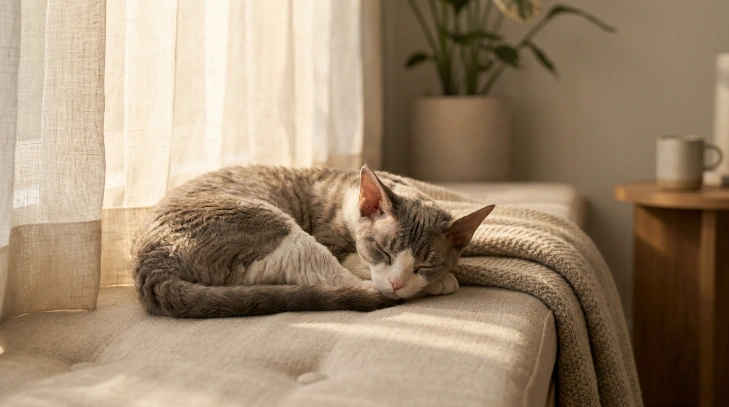
If your cat seems to spend most of the day curled up on a sofa, windowsill, or your bed, you may wonder: why do cats sleep so much? For most healthy cats, long stretches of rest are completely normal. Cats are built for short bursts of activity followed by recovery, and their sleep patterns reflect that biology.
Most adult cats sleep for roughly 12 to 16 hours in a 24-hour period, while kittens and senior cats can sleep even longer. The exact amount varies with age, health, activity level, environment, and personality. A cat that has always been a champion napper may simply be following its normal rhythm. A sudden increase in sleep, however, deserves more attention—especially if it comes with appetite loss, weight changes, vomiting, weakness, or behavior changes.
Understanding what is normal makes it easier to recognize when sleep may be telling you something about your cat’s health. Here are seven important reasons cats sleep so much and how to know when to call your veterinarian.
1. Cats Are Designed to Conserve Energy
Domestic cats may live indoors and eat from a bowl, but their bodies still carry many of the same behavioral patterns as small feline predators. Hunting requires intense concentration, stalking, sprinting, jumping, and rapid reactions. Rest allows the body to conserve energy between those bursts of activity.
This helps explain why a cat can appear deeply relaxed for hours and then suddenly race through the house, chase a toy, or leap onto furniture. The cycle of rest followed by short, energetic activity is a normal part of feline behavior.
Researchers studying sleep in domestic cats have shown that cats experience organized sleep-wake patterns and both REM and non-REM sleep. A classic controlled study published in Behavioural Brain Research found that domestic cats show normal sleep homeostasis, meaning their bodies regulate sleep pressure and recovery in ways similar to other mammals.
2. Cats Take Many Short Naps
Cats do not necessarily sleep in one long block the way many people do. Instead, they often alternate between light naps, deeper sleep, brief periods of alertness, grooming, eating, and activity.
During a light catnap, your cat may look asleep while still reacting quickly to sounds or movement. You may notice the ears twitching, the head lifting when you enter the room, or the eyes opening at the slightest noise. This lighter sleep lets cats rest without becoming completely unaware of their surroundings.
Deep sleep occurs in shorter periods. During REM sleep, you may notice whisker movement, paw twitches, tail flicks, or small facial movements. These are generally normal signs of dreaming rather than something to worry about.
3. Kittens Need Extra Sleep for Growth
Kittens often sleep much more than adult cats because their bodies are growing rapidly. Sleep supports physical development, brain maturation, immune function, and recovery from all the exploration and play that fills their waking hours.
Young kittens may sleep close to 20 hours a day. As they mature, their total sleep time usually becomes more similar to that of an adult cat. If you are raising a young cat, our guide on when cats stop growing explains how development changes through kittenhood and when most cats reach adult size.
A sleepy kitten is usually normal if it wakes easily, eats well, plays enthusiastically when awake, gains weight, and uses the litter box normally. A kitten that is difficult to wake, refuses food, seems weak, or stops growing should be checked by a veterinarian promptly.
4. Senior Cats Often Rest More
Older cats commonly spend more time resting than younger adults. Age-related changes in muscle strength, joint comfort, metabolism, hearing, and overall activity can reduce how much time a senior cat spends climbing, playing, or exploring.
A study of client-owned cats published in PLOS ONE used activity-monitoring technology and found that physical activity and jumping decreased with age, while resting and sleeping time increased. That makes increased sleep a common part of aging—but not something that should automatically be dismissed.
Senior cats are also more likely to develop conditions such as arthritis, kidney disease, hyperthyroidism, diabetes, dental disease, and heart problems. If an older cat starts sleeping noticeably more, hides more often, stops jumping, loses weight, drinks excessively, or changes eating habits, a veterinary exam is a good idea.
5. Cats Are Most Active Around Dawn and Dusk
Cats are often described as crepuscular, meaning they tend to be especially active around dawn and dusk. That timing fits the hunting patterns of many small prey species.
Your indoor cat may adapt its routine around your household, but many cats still show bursts of activity early in the morning or evening. This can make it seem as though your cat sleeps all day when, in reality, much of its activity happens when you are asleep, leaving for work, or winding down.
A consistent play routine can help channel this natural pattern. Two or three short interactive play sessions each day—especially before breakfast and in the evening—can provide healthy physical and mental stimulation.
6. Boredom Can Make Indoor Cats Sleep More
Sometimes a cat sleeps because there is simply not much else happening. Indoor cats without enough climbing opportunities, play, window views, puzzle feeders, or social interaction may spend extra time resting.
That does not necessarily mean the cat is unhealthy, but chronic under-stimulation can contribute to weight gain and unwanted behavior. Try rotating toys instead of leaving every toy out all the time. Add a tall cat tree, scratching surfaces, food puzzles, safe window perches, cardboard boxes, and short interactive hunting games.
Enrichment is especially useful if your cat is eating normally and appears healthy but becomes more active as soon as something interesting happens. A bored cat often perks up quickly when a favorite toy appears, while a truly lethargic cat may remain uninterested.
7. Extra Sleep Can Sometimes Signal Illness
The most important distinction is between a cat that is sleeping and a cat that is lethargic. A sleeping cat usually wakes normally and behaves like itself afterward. A lethargic cat may appear weak, unusually quiet, reluctant to move, uninterested in play, or difficult to engage even when awake.
Illness, pain, fever, infection, dehydration, anemia, digestive disease, and many other medical problems can cause cats to rest more. Because cats often hide illness, a change in routine may be one of the first signs owners notice.
Pay particular attention if increased sleep occurs with a reduced appetite. Our guide to why a cat may stop eating explains why appetite changes can become serious quickly. Likewise, repeated cat vomiting or ongoing cat diarrhea combined with lethargy deserves veterinary attention.
How Much Sleep Is Normal for a Cat?
There is no single perfect number for every cat, but these general patterns are useful:
- Kittens: often 16 to 20 hours per day.
- Healthy adult cats: commonly about 12 to 16 hours per day.
- Senior cats: may sleep longer as activity levels decline.
The trend is often more important than the exact number. If your cat has always slept 15 hours a day and remains bright, playful, hungry, and healthy when awake, that may be perfectly normal. If the same cat suddenly starts sleeping almost constantly and ignores food or interaction, the change matters.
How to Tell Sleep From Lethargy
Ask yourself what your cat does after waking. A normally sleepy cat should still show interest in food, grooming, play, exploration, and social interaction. The cat should be able to walk normally and respond to sounds, toys, or familiar routines.
Possible signs of lethargy include:
- Difficulty waking or unusually weak responses
- Refusing food or treats
- Hiding more than usual
- Reluctance to jump, climb, or walk
- Rapid or labored breathing
- Repeated vomiting or diarrhea
- Sudden weight loss
- Major changes in thirst or urination
- Loss of interest in normally exciting activities
If your cat is sleeping more and you are also noticing changes in drinking, our guide on how much water a cat should drink can help you understand what normal hydration looks like.
When Should You Call a Vet?
Contact your veterinarian if your cat’s sleep pattern changes suddenly or the extra sleep comes with weakness, appetite loss, breathing changes, pain, vomiting, diarrhea, weight loss, unusual thirst, abnormal urination, or major behavior changes.
Emergency care may be appropriate if your cat is difficult to wake, collapses, struggles to breathe, cannot stand, has pale or blue gums, repeatedly vomits, or appears severely weak.
It is also worth scheduling a routine veterinary visit for a senior cat whose activity has gradually declined. Changes that look like “just getting older” can sometimes be early signs of arthritis or another treatable condition.
Can You Help Your Cat Have a Healthier Sleep Routine?
You do not need to stop a healthy cat from sleeping. Instead, focus on making its waking hours active and enriching. Keep feeding times predictable, provide daily interactive play, offer climbing and scratching opportunities, and make sure your cat has quiet, comfortable places to rest.
For indoor cats, environmental enrichment can help maintain healthy activity. Short play sessions that mimic hunting—stalk, chase, catch, then rest—fit naturally with feline behavior. Avoid waking your cat repeatedly just because it seems to nap often. Good-quality rest is part of normal feline life.
Frequently Asked Questions
Is it normal for a cat to sleep all day?
It can be normal for a cat to spend much of the day sleeping, especially if it is active during the early morning, evening, or night. The key is whether the cat wakes normally and behaves like itself when awake.
Do cats sleep more when they are bored?
Yes. Indoor cats with limited stimulation may spend more time resting. Enrichment, climbing spaces, puzzle feeders, window views, and interactive play can encourage healthy activity.
Why does my kitten sleep so much?
Kittens need extra sleep to support rapid growth and development. Long sleep periods are generally normal if the kitten is eating, playing, growing, and behaving normally while awake.
Do old cats sleep more?
Often, yes. Research has found that resting and sleeping time tends to increase with age in cats. However, new lethargy, pain, weight loss, or reduced mobility should not simply be blamed on aging.
Should I wake my cat if it sleeps too much?
Usually no. If your cat is healthy and following its normal routine, there is no need to interrupt sleep. If you are concerned because your cat is unusually difficult to wake or is acting unwell after waking, contact your veterinarian.
PetCareRoutine Perspective
So, why do cats sleep so much? In most cases, the answer is simple: sleep is built into feline biology. Cats conserve energy, take frequent naps, and adjust their rest according to age, environment, and daily activity. Kittens and senior cats usually sleep more, while healthy adults commonly spend more than half of each day resting.
The most useful thing you can do is learn your own cat’s normal pattern. A cat that has always loved long naps may be perfectly healthy. A sudden change in sleep, especially when paired with appetite loss, weakness, digestive problems, weight change, or reduced interest in normal activities, is more important than the number of hours alone. When in doubt, your veterinarian can help determine whether your cat is simply enjoying a well-earned nap or showing an early sign of illness.