
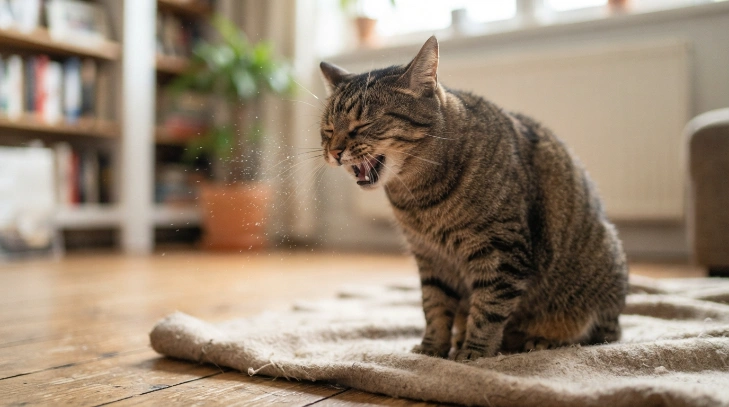
A single sneeze from your cat is usually not a reason to panic. Cats sneeze to clear dust, hair, and other irritants from their nasal passages. But if you keep hearing repeated sneezing, especially over several days, the pattern deserves a closer look.
The tricky part is that why does my cat keep sneezing does not have one universal answer. An irritated nose, a respiratory infection, dental disease, a foreign object, or a less common nasal problem can all produce similar-looking sneezes. What happens alongside the sneezing—and how long it lasts—often matters more than the sneeze itself.
1. Dust, Litter, or Household Irritants
Your cat’s nose is constantly sampling the air. Dusty litter, smoke, perfume, aerosol sprays, strong cleaning products, and other airborne particles can irritate the nasal lining and trigger a sneeze. VCA notes that repeated sneezing can result from airborne irritants such as powder, dust, fumes, smoke, and aerosol sprays.
Look for a pattern. Does your cat sneeze immediately after the litter box is cleaned? Does it happen when you use a spray cleaner, light a scented candle, or open a dusty storage area? If the sneezing is mild and your cat otherwise eats, plays, and behaves normally, removing the suspected irritant is a sensible first step.
2. A Feline Upper Respiratory Infection
Upper respiratory infections are among the most important causes of persistent sneezing in cats. Cornell University College of Veterinary Medicine lists sneezing, nasal or eye discharge, conjunctivitis, mouth ulcers, lethargy, and reduced appetite among possible respiratory-infection signs.
Feline herpesvirus and calicivirus are major viral causes. Bacterial organisms can also contribute. A respiratory infection is more likely when sneezing arrives with congestion, watery or colored discharge, runny eyes, reduced appetite, fever, or low energy. These infections can spread between cats, so a sick cat in a multi-cat home may need temporary separation and veterinary guidance.
If your cat suddenly stops eating while sneezing, take that combination seriously. A blocked nose can reduce the ability to smell food, which can make an already sick cat less interested in eating. Our guide on why a cat may stop eating can help you recognize other warning signs that deserve veterinary attention.
3. Chronic Nasal Inflammation
Sometimes the original respiratory problem passes, but inflammation inside the nasal passages remains. This can lead to recurring bouts of sneezing, congestion, or nasal discharge. VCA describes chronic upper respiratory disease as a condition that can produce ongoing or recurring nasal signs.
A cat with chronic nasal inflammation may seem surprisingly well between episodes. That does not necessarily mean the problem should be ignored. Repeated symptoms can justify an examination, particularly when they keep returning or gradually become more frequent.
4. Something Is Stuck in the Nose
A small piece of plant material, grass, dust, or another foreign object can irritate the nasal passage. In these cases, sneezing may start suddenly and can be unusually forceful or repetitive. A cat may also rub its face, paw at the nose, or develop discharge from one nostril.
Do not try to probe deep inside your cat’s nose with tweezers or another object. A veterinarian can examine the nasal passages safely and, when necessary, use imaging, rhinoscopy, or a nasal flush to investigate and remove material.
5. Dental Disease Can Trigger Sneezing
It is easy to assume that every sneeze comes from the nose, but dental disease can sometimes be involved. The roots of some upper teeth sit close to the nasal passages. VCA notes that disease involving tooth roots can contribute to nasal signs.
Look for clues such as bad breath, difficulty chewing, dropping food, excessive drooling, mouth discomfort, or reluctance to have the face touched. If sneezing occurs alongside obvious dental problems, mention both issues to your veterinarian rather than treating them as unrelated.
6. Polyps or Other Nasal Growths
Less common problems can also cause repeated sneezing. Nasopharyngeal polyps are noncancerous growths that occur particularly in younger cats and can cause upper-airway signs. Cornell notes that affected cats may show sneezing, nasal discharge, noisy breathing, swallowing difficulty, or other signs of upper respiratory obstruction.
In older cats, veterinarians may also consider nasal masses or tumors when sneezing is persistent, especially if there is bloody discharge, facial swelling, weight loss, or a progressive change in breathing. These causes are less common, but persistent or unusual symptoms are exactly why a proper examination matters.
7. Fungal or Other Less Common Infections
Fungal infections can affect the feline respiratory tract and produce chronic nasal signs. They are less common than routine viral respiratory infections, but they can become important when sneezing persists, treatment does not work as expected, or other unusual symptoms develop.
This is one reason not to keep switching home remedies when a cat has been sneezing for a prolonged period. The appropriate treatment depends on the underlying cause, and some conditions require diagnostic testing rather than another over-the-counter product.
What Should You Watch for Besides Sneezing?
Think of sneezing as one piece of a larger puzzle. Keep track of whether your cat has nasal or eye discharge, coughing, congestion, mouth ulcers, reduced appetite, weight loss, lethargy, fever, noisy breathing, or changes in normal behavior.
The duration matters too. An isolated sneeze is very different from repeated episodes every day for a week. If your cat’s sneezing keeps returning, write down when it happens and what else you notice. A short video can also help a veterinarian distinguish sneezing from coughing, gagging, or other respiratory sounds.
For broader context, our guides to cat vomiting and cat diarrhea cover other symptoms that can appear alongside illness. Looking at the whole pattern is more useful than focusing on one symptom in isolation.
When Should You Take a Sneezing Cat to the Vet?
Arrange a veterinary appointment when sneezing is persistent, repeatedly returns, or comes with nasal or eye discharge, appetite loss, weight loss, lethargy, facial swelling, mouth problems, or other signs of illness. VCA recommends veterinary evaluation for ongoing sneezing and excessive nasal discharge.
Seek urgent veterinary care if your cat is struggling to breathe, breathing with its mouth open, becoming severely weak, or showing obvious respiratory distress. Cornell notes that severe respiratory infections can, in rare cases, cause breathing difficulty.
What Can You Do at Home?
If your cat has only mild sneezing and otherwise seems normal, start with simple environmental changes. Keep the litter area clean, reduce dust and strong fragrances, avoid cigarette smoke, and improve ventilation. Do not give human cold medicines, decongestants, or leftover antibiotics unless your veterinarian specifically prescribes a medication for your cat.
If a veterinarian diagnoses an uncomplicated upper respiratory infection, supportive care may include keeping the cat hydrated, encouraging food intake, gently cleaning discharge, and improving humidity. VCA notes that increased environmental humidification can help some congested cats. Follow your veterinarian’s instructions rather than choosing medications yourself.
Frequently Asked Questions
Is it normal for a cat to sneeze sometimes?
Yes. Occasional sneezing can be a normal response to dust or another minor nasal irritant. Repeated or persistent sneezing deserves closer attention, especially when other symptoms appear.
Why does my indoor cat keep sneezing?
Indoor cats can still encounter dust, litter particles, cleaning fumes, smoke, and other irritants. They can also develop respiratory infections and other medical conditions, so being indoors does not rule out illness.
Should I worry if my cat sneezes but seems fine?
A few isolated sneezes in an otherwise normal cat are usually less concerning than repeated episodes. Monitor the frequency and look for changes in appetite, energy, eyes, nose, breathing, or behavior.
Can cat sneezing be caused by dental disease?
Yes. Disease affecting upper tooth roots can sometimes extend toward the nasal passages and contribute to sneezing or nasal discharge.
PetCareRoutine Perspective
If you are wondering why your cat keeps sneezing, start by looking at the pattern rather than counting individual sneezes. An occasional sneeze after dust or litter exposure is very different from repeated sneezing accompanied by discharge, appetite loss, lethargy, or breathing changes.
Keep your cat’s environment as low-irritant as practical, avoid human medications, and give persistent or worsening symptoms the attention they deserve. A veterinarian can determine whether the problem is a simple irritation, an infection, dental disease, or something that needs more investigation. When breathing is difficult, treat it as urgent rather than waiting to see whether the sneezing stops.