
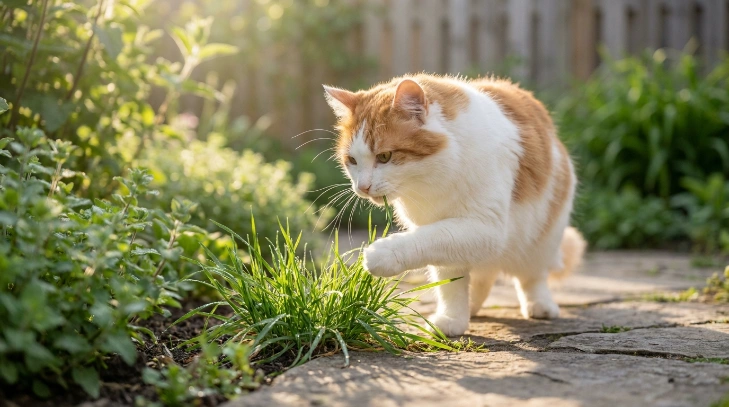
You may feed your cat a complete diet, keep fresh water available, and still catch them nibbling grass the moment they get outside. That naturally raises a question: why do cats eat grass?
Grass eating can be a normal feline behavior. Cats may investigate greenery because of texture, taste, instinct, or simple curiosity. It does not automatically mean your cat is sick or missing nutrients. However, the type of plant matters enormously because some common plants are dangerous to cats.
Cornell University College of Veterinary Medicine notes that cats may chew plants during normal investigation and play and suggests safe alternatives such as oat grass for cats interested in greenery.
1. Eating Grass Can Be Normal Cat Behavior
Cats are obligate carnivores, but that does not mean they never interact with plant material. A cat exploring a garden, balcony, or pot of cat grass may sniff, bite, and chew the leaves simply because they are interesting.
Occasional grass nibbling in an otherwise bright, active cat with a normal appetite and normal litter-box habits is usually less concerning than a sudden compulsive change.
The key is to look at the whole cat rather than the grass alone. If your cat is eating normally, maintaining weight, drinking normally, and behaving as usual, occasional interest in safe grass may simply be part of their routine.
2. Cats May Enjoy the Texture and Sensory Experience
Fresh grass moves, smells distinctive, and has a texture unlike commercial cat food. For an indoor cat, a tray of safe grass can also provide environmental enrichment.
Cornell explains that plant chewing can be part of normal investigation and play. This makes a behavioral explanation more plausible than assuming every cat that chews grass has a nutritional deficiency.
If your cat frequently seeks unusual things to chew, consider whether their environment offers enough climbing, hunting-style play, scratching opportunities, food puzzles, and interaction.
3. Grass Does Not Necessarily Mean a Nutritional Deficiency
One of the most common assumptions is that cats eat grass because they are deficient in vitamins or minerals. There is no reason to diagnose a deficiency from grass eating alone.
A complete and balanced cat food appropriate for your cat’s life stage should remain the nutritional foundation. Kittens have different nutritional requirements from adults, so owners of young cats can also review our kitten feeding guide for practical feeding guidance.
If your cat has weight loss, poor coat quality, persistent digestive problems, an unusually strong appetite, or other changes, ask your veterinarian to investigate rather than adding supplements at random.
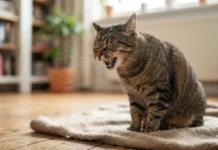
4. Some Cats Vomit After Eating Grass
Owners often associate grass with vomiting because they find a small pile of grass-containing vomit afterward. Plant material can irritate the gastrointestinal tract, and the ASPCA notes that consumption of plant material can cause vomiting and gastrointestinal upset even with plants that are not considered highly toxic.
That does not prove cats deliberately eat grass in order to make themselves vomit. Occasional vomiting after chewing greenery and frequent unexplained vomiting are also very different situations.
If vomiting becomes recurrent, contains blood, accompanies lethargy, or your cat cannot keep food or water down, it deserves veterinary attention. Our guide to common causes of cat vomiting explains when a seemingly simple stomach upset becomes more concerning.
5. Not Every Green Plant Is Safe
This is the most important safety point. A cat interested in grass may also chew other plants, and appearance alone cannot tell you whether a plant is safe.
The ASPCA Animal Poison Control Center’s cat plant database lists numerous toxic and non-toxic plants. Cornell also warns that lilies are especially hazardous to cats and can cause life-threatening kidney failure after very small exposures.
Do not assume a decorative houseplant is safe because it resembles grass. Identify every plant your cat can access and remove toxic species. This is especially important with lilies, sago palms, certain philodendrons and other known hazards.
If you believe your cat has chewed a potentially toxic plant, contact a veterinarian or animal poison-control service promptly. Do not wait for severe symptoms to appear.
6. Safe Cat Grass Can Be a Better Alternative
If your cat loves greenery, providing a deliberately grown cat-safe option can reduce temptation to investigate unknown houseplants.
Cornell specifically mentions alternatives such as oat grass, catnip, and catmint for cats interested in vegetable matter. Choose products intended for pets, grow them without pesticides or unsafe fertilizers, and place them away from toxic plants so your cat does not learn that every pot is a snack station.
Keep the grass clean and replace it if it becomes moldy, contaminated, or heavily damaged. Even safe plant material can cause stomach upset when consumed in large quantities.
7. A Sudden Change Can Signal a Bigger Problem
Occasional grass eating is one thing; a sudden change in appetite or behavior is another.
Contact your veterinarian if grass eating becomes obsessive or appears alongside repeated vomiting, diarrhea, weight loss, lethargy, abdominal discomfort, excessive thirst, or refusal to eat normal food.
Appetite loss in cats deserves particular attention. If your cat is ignoring meals while seeking grass or other unusual material, read our guide on why a cat may stop eating and arrange veterinary care when appropriate.
Likewise, persistent loose stool should not simply be blamed on grass. Our cat diarrhea guide covers common causes and warning signs.
How to Let Your Cat Eat Grass More Safely
- Use a known cat-safe grass. Oat, wheat, or other products specifically sold as cat grass are preferable to unidentified outdoor plants.
- Avoid chemical exposure. Do not offer grass treated with herbicides, pesticides, lawn chemicals, or unsafe fertilizers.
- Remove toxic plants. Check houseplants and garden plants against a reliable veterinary or poison-control database.
- Supervise outdoor access. This reduces exposure to unknown plants and other hazards.
- Offer enrichment. Daily play, climbing areas, scratching surfaces, and food puzzles give indoor cats more appropriate outlets.
- Watch the amount. Frequent large-volume plant eating is worth discussing with your veterinarian.
When Is Grass Eating an Emergency?
Grass eating itself is rarely the emergency. The concern is what your cat actually swallowed and what symptoms follow.
Seek prompt veterinary advice after known or suspected ingestion of a toxic plant. Emergency evaluation is particularly important for lily exposure because even small amounts can be dangerous to cats.
Also seek care for difficulty breathing, collapse, seizures, severe weakness, repeated vomiting, marked drooling, inability to swallow, or other rapidly developing symptoms.
If you are unsure what plant your cat ate, take a clear photograph or bring a sample in a secure container if it is safe to do so. Accurate plant identification can help the veterinary team assess risk.
Frequently Asked Questions
Is it normal for cats to eat grass?
Yes, occasional chewing of safe grass can occur in healthy cats. Interest in plants can be exploratory or behavioral. A sudden increase accompanied by illness signs deserves more attention.
Do cats eat grass because they have worms?
Grass eating alone does not diagnose intestinal parasites. If your cat has diarrhea, weight loss, poor coat condition, vomiting, or visible worms, ask your veterinarian about appropriate testing and parasite control.
Does grass help cats with hairballs?
Grass is sometimes associated with vomiting, but it should not be treated as a proven hairball therapy. Frequent hairballs or vomiting should be discussed with a veterinarian, particularly if your cat also has appetite or weight changes.
Can indoor cats have cat grass?
Yes, a known cat-safe grass grown without harmful chemicals can provide an indoor cat with a safer greenery option. Keep toxic houseplants inaccessible even when cat grass is available.
Why does my cat eat grass and then vomit?
Plant material can irritate the digestive tract, so some cats may vomit after eating it. Repeated vomiting, blood, lethargy, appetite loss, or inability to keep water down warrants veterinary advice.
What should I do if my cat eats a lily?
Treat suspected lily exposure as urgent and contact a veterinarian or animal poison-control service immediately. Cornell warns that lilies can cause life-threatening kidney failure in cats even after very small exposures.
PetCareRoutine Perspective
For many cats, nibbling safe grass is simply another way of exploring the world. It does not automatically mean your cat has a vitamin deficiency, parasites, or an upset stomach.
The more important question is whether the plant is safe and whether your cat otherwise seems healthy. Provide known cat-safe grass if your cat enjoys greenery, remove toxic houseplants, avoid chemically treated outdoor grass, and watch for changes in appetite, digestion, weight, and behavior.
When grass eating suddenly becomes excessive or appears alongside vomiting, diarrhea, appetite loss, or other illness signs, involve your veterinarian. And whenever an unknown or toxic plant may have been swallowed, treat plant identification and veterinary advice as the priority.