

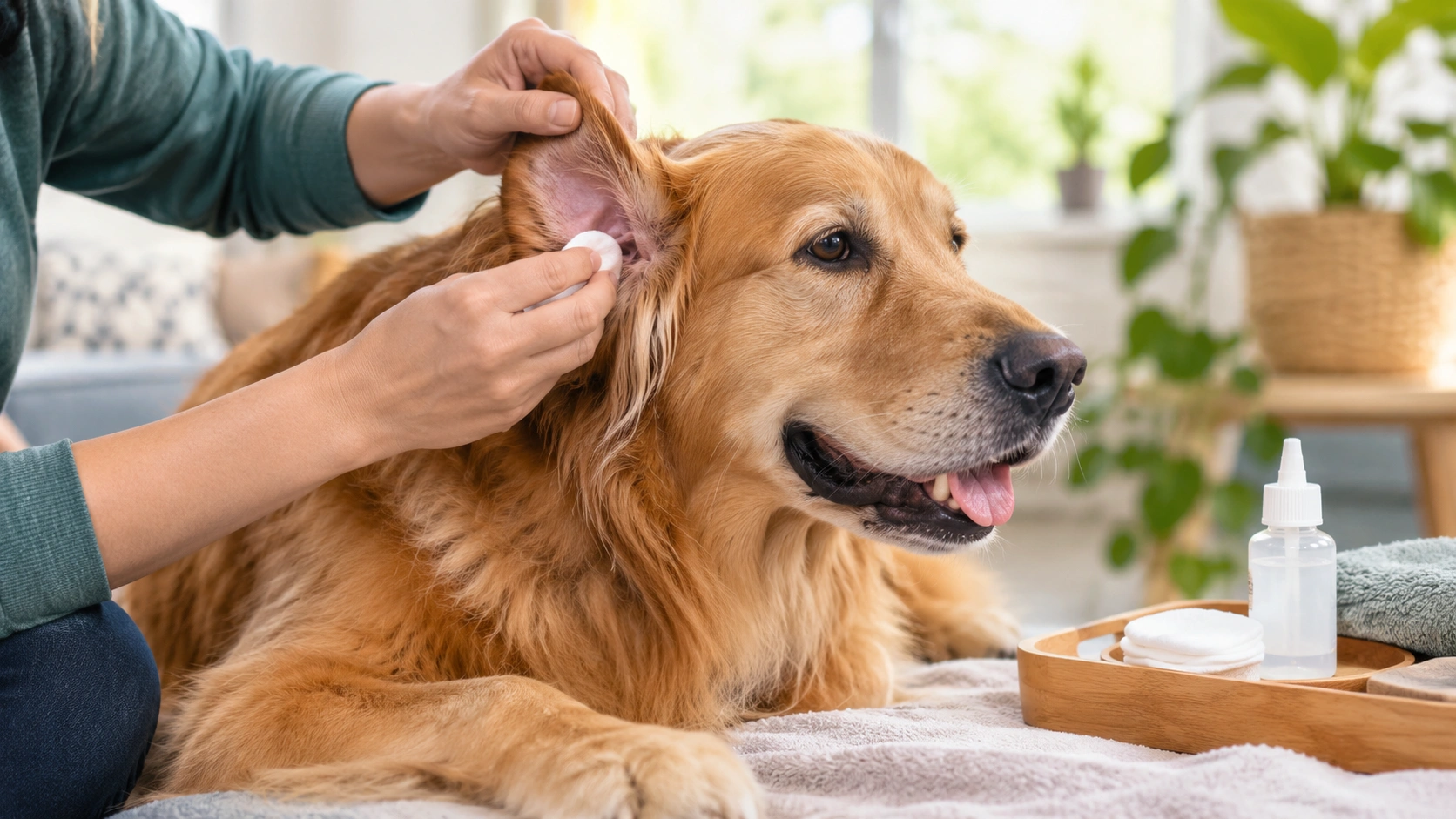
How to Clean Dog Ears: 7 Essential Tips for Healthy Ears
Learning how to clean dog ears sounds simple until you are holding an ear-cleaning bottle in one hand and your dog is already heading for the door.
The good news is that ear care does not need to become a wrestling match. For many dogs, the safest routine is surprisingly straightforward: check the ears regularly, clean only when needed, use an appropriate product, and know when an ear should be examined by a veterinarian instead of cleaned at home.
That last point matters. Redness, pain, strong odor, swelling, or unusual discharge can signal an ear problem that routine cleaning will not fix. The Merck Veterinary Manual advises owners to follow veterinary instructions for home ear cleaning, especially when a dog has recurrent inflammation or infection.
Here is a practical way to make dog ear cleaning safer, calmer, and easier to understand.
Do All Dogs Need Their Ears Cleaned?
No. A healthy dog does not necessarily need ear cleaner on a fixed weekly schedule.
Healthy ears are generally comfortable, not noticeably smelly, and free from significant redness or discharge. Some dogs naturally produce more wax than others, while dogs that swim frequently, have floppy ears, allergies, or a history of ear problems may need more regular monitoring.
Cleaning too often can irritate the sensitive skin of the ear canal. That means the goal is not to make every ear perfectly spotless. It is to maintain a healthy ear without disturbing it unnecessarily.
Make ear checks part of your normal grooming routine. A quick look and gentle sniff can tell you a lot before you ever reach for a bottle.
1. Check the Ear Before You Clean It
Before learning the technique for how to clean dog ears, learn when not to clean them.
Lift the ear flap gently and look at the visible part of the ear. You are checking for anything that seems different from your dog’s normal appearance.
Contact your veterinarian if you notice significant redness, swelling, obvious pain, a strong or unusual odor, pus-like discharge, blood, repeated head shaking, persistent scratching, or your dog suddenly refusing to let you touch the ear.
These signs can occur with ear infections, mites, allergies, foreign material, inflammation, or other problems. Merck notes that veterinarians may need to examine the canal with an otoscope and test ear discharge when infection is suspected.
If an ear is painful, forcing a home cleaning can make your dog more uncomfortable and can create a lasting fear of ear handling.
2. Choose a Veterinarian-Recommended Ear Cleaner
The safest option is a dog ear-cleaning solution recommended for your pet by a veterinarian.
Do not assume that something safe for human skin belongs inside a dog’s ear. Homemade mixtures and harsh household products can irritate delicate tissue, particularly if the ear is already inflamed.
The VCA guidance on dog ear cleaning and handling recommends asking your veterinarian whether routine home cleaning is appropriate and having them demonstrate a safe technique and product.
For a basic session, gather the cleaner, cotton balls or gauze, a towel, and a few treats. Having everything ready before you bring your dog over keeps the process short and predictable.
3. Keep Cotton Swabs Out of the Ear Canal
This is one of the most important dog ear-cleaning rules.
Do not push cotton-tipped swabs, fingers, or other objects deep into the ear canal. You can push wax and debris farther inward or injure sensitive structures.
Dogs also have a different ear-canal shape from humans. The canal extends vertically and then turns horizontally toward the eardrum, so digging into what you can see from the outside is not a safe way to clean it.
Merck’s step-by-step ear-cleaning guidance specifically warns against using anything that pushes debris deeper into the canal and recommends appropriate cleaning solution and cotton rather than cotton swabs.
4. Make the First Part Calm and Positive
If your dog only has their ears touched when something unpleasant is about to happen, they can quickly learn to avoid you whenever the cleaning bottle appears.
Build tolerance before you need a full cleaning. At a calm time, briefly touch the ear flap, reward your dog, and stop. Later, lift the flap for a second and reward again. Gradually introduce the bottle without immediately putting solution in the ear.
Keep sessions short. A dog that is mildly uncertain can often become more comfortable through patient, reward-based handling. A dog that growls, snaps, panics, or appears painful needs a different approach. Do not punish warning behavior or physically overpower the dog.
VCA notes that resistance to ear handling can reflect fear, pain, or both. Painful ears may need veterinary treatment before home care becomes comfortable.
5. Use the Correct Dog Ear-Cleaning Technique
Once you have checked the ear and know that routine cleaning is appropriate, position your dog somewhere easy to wipe down. Ear cleaning can get messy when a dog shakes their head.
Lift the ear flap gently. Following the directions for your veterinarian-approved cleaner, place the recommended amount into the canal. Avoid touching the bottle tip to the ear, which can contaminate the applicator.
Gently massage the base of the ear. You may hear a soft squishing sound as the cleaner moves through the canal and loosens debris.
Then let your dog shake their head. This natural movement helps bring loosened material outward.
Use cotton or gauze to wipe away debris that has reached the accessible part of the ear. Stay where you can safely see and reach without forcing material deeper.
Reward your dog when you finish. If the process causes obvious pain at any point, stop.
6. Do Not Over-Clean Healthy Ears
More cleaning is not automatically better.
A dog with naturally clean, comfortable ears may need very little intervention. Another dog may have a veterinarian-directed maintenance schedule because of recurrent ear trouble.
That is why there is no perfect cleaning frequency for every dog.
Instead of choosing an arbitrary schedule, pay attention to your dog’s normal ear condition and follow veterinary advice when there is a history of problems. Frequent cleaning without a reason can irritate the canal and disrupt an otherwise comfortable ear.
If your dog repeatedly develops wax, odor, inflammation, or infections despite regular care, do not simply clean more often. Recurrent ear disease can be associated with allergies and other underlying problems that need diagnosis.
7. Keep Ears Dry After Baths and Swimming
Moisture matters, particularly for dogs that swim often or have ears that retain humidity.
After bathing, avoid directing water into the ear canal and gently dry the outer ear. If your dog swims frequently or has a history of moisture-related ear trouble, ask your veterinarian whether a specific drying or maintenance product is appropriate.
Do not improvise with alcohol, vinegar, peroxide, or another homemade mixture unless your veterinarian specifically instructs you to use it. An irritated or damaged ear may react very differently from a healthy one.
Ear care fits naturally alongside bathing, brushing, nail trimming, and skin checks rather than functioning as an isolated chore.
[Internal link: how often should you bathe your dog]
What Does a Healthy Dog Ear Look Like?
There is normal variation between dogs, but a healthy ear should generally be comfortable when handled. You should not see major swelling, heavy discharge, bleeding, or intense inflammation, and there should not be a strong unpleasant smell.
A small amount of wax is not automatically a problem. The important question is whether something has changed.
Get familiar with your dog’s baseline. If you check the ears during routine grooming, you are more likely to notice a new odor, increased debris, redness, or sensitivity early.
Common Dog Ear-Cleaning Mistakes
Most home ear-care problems come from doing too much rather than too little.
- Cleaning a painful or inflamed ear: an infected or injured ear needs assessment rather than aggressive home cleaning.
- Using cotton swabs deep in the canal: this can push debris inward and potentially cause injury.
- Using random household products: products that seem gentle can irritate ear tissue.
- Cleaning too frequently: unnecessary cleaning can contribute to irritation.
- Forcing a frightened dog: restraint can increase fear and make future ear care much harder.
- Ignoring recurring symptoms: repeated odor, discharge, itching, or inflammation may indicate an underlying condition.
When Should a Veterinarian Check Your Dog’s Ears?
Routine cleaning is maintenance. It is not treatment for every ear problem.
Arrange veterinary care if your dog has persistent head shaking, frequent ear scratching, redness, swelling, strong odor, unusual discharge, bleeding, marked sensitivity, loss of balance, or repeated ear problems.
Seek prompt advice if symptoms appear suddenly or your dog seems significantly painful. A veterinarian can examine deeper parts of the canal that you cannot safely evaluate at home and determine whether bacteria, yeast, parasites, allergies, a foreign object, or another condition is involved.
Never use leftover prescription ear medication from a previous problem unless your veterinarian has told you to use it for the current episode. Different ear conditions can require different treatment.
Frequently Asked Questions
How often should I clean my dog’s ears?
There is no single schedule for every dog. Some dogs rarely need cleaning, while dogs with recurrent ear problems may have a veterinarian-directed routine. Clean based on your dog’s needs rather than automatically cleaning healthy ears every few days.
Can I use water to clean my dog’s ears?
Do not pour ordinary water into the ear canal as a substitute for an appropriate ear cleaner. Trapped moisture can contribute to ear problems. Ask your veterinarian which product is suitable for your dog.
Can I use hydrogen peroxide in my dog’s ears?
Do not routinely use hydrogen peroxide or other household products in your dog’s ears. They can irritate sensitive tissue. Use a veterinarian-recommended ear-cleaning solution instead.
Why does my dog shake after I clean the ears?
Head shaking immediately after an appropriate cleaning is common and helps move cleaner and loosened debris outward. Persistent shaking, pain, redness, or scratching outside the cleaning session deserves veterinary attention.
Should I clean brown wax from my dog’s ears?
A small amount of wax can be normal. Heavy dark debris, a strong smell, discomfort, or a sudden change should be evaluated rather than assumed to be ordinary wax.
What if my dog hates having their ears cleaned?
Start with short, reward-based handling sessions instead of forcing a full cleaning. If your dog suddenly resists ear handling, consider pain as a possible reason and have the ears checked.
PetCareRoutine Perspective
Good ear care is less about cleaning constantly and more about knowing your dog.
Check the ears often enough to recognize what normal looks and smells like. When cleaning is needed, use an appropriate product, keep objects out of the canal, work gently, and make the experience as calm as possible.
Most importantly, recognize the line between grooming and medical care. A mildly dirty healthy ear may be suitable for routine cleaning. A red, painful, smelly, swollen, or repeatedly troublesome ear deserves a veterinarian.
That simple distinction can prevent unnecessary irritation while helping you catch genuine ear problems earlier.




[…] tartar, broken teeth, swelling, or unusual odor. Pairing mouth checks with routines such as cleaning your dog’s ears safely can make preventive care easier to […]
Comments are closed.