
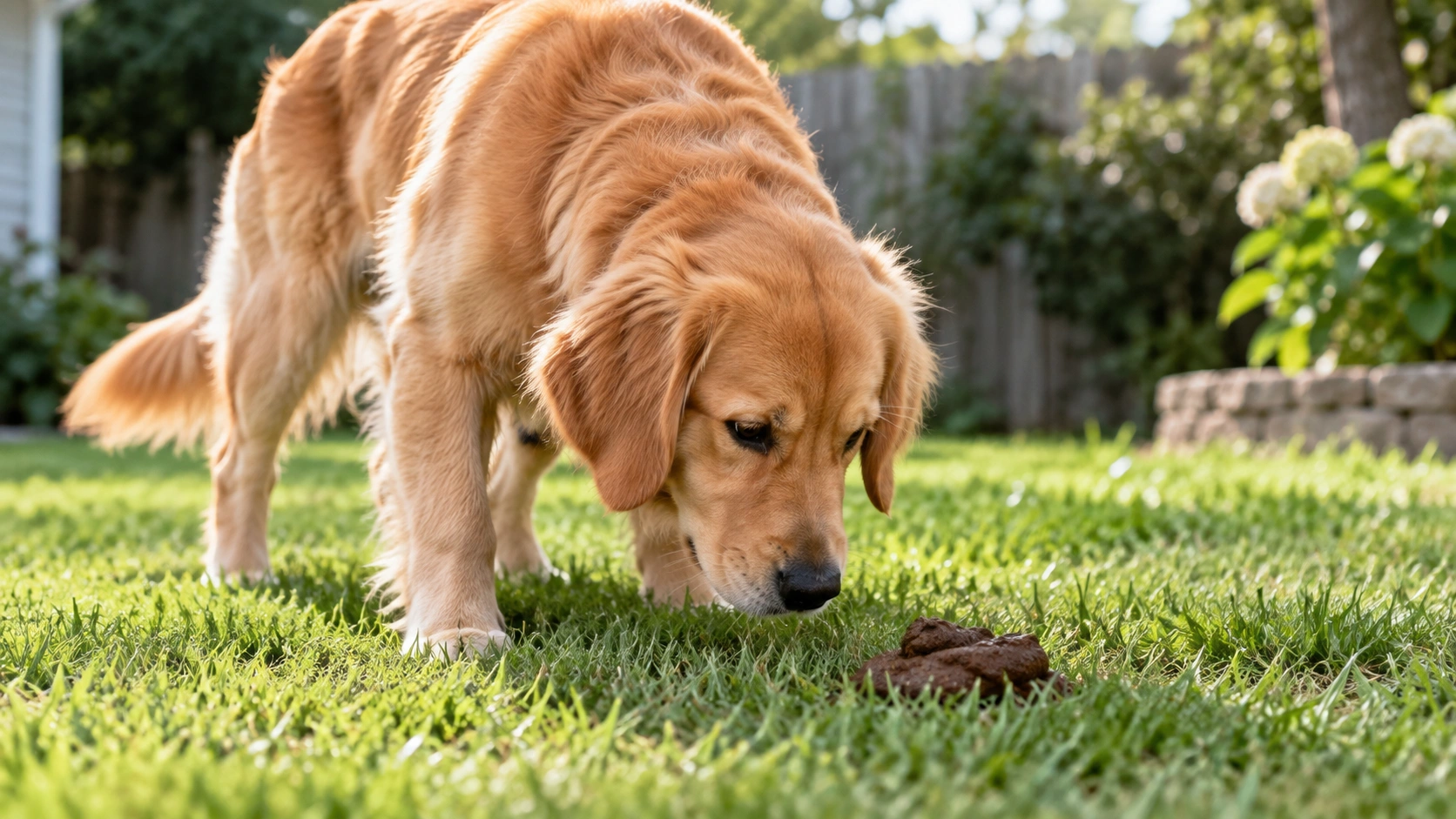
You turn around for a few seconds during a walk, then discover your dog investigating something you desperately wish they would leave alone. For many owners, few canine habits are as unpleasant as poop eating.
So, why do dogs eat poop? The behavior has a name—coprophagia—and it can happen for several reasons. Puppies may investigate feces as part of normal exploration, mother dogs naturally clean up after young puppies, and some adult dogs develop a persistent preference for fresh stool. In other cases, sudden poop eating can occur alongside hunger, digestive problems, parasites, medication effects, anxiety, or other health changes.
Importantly, poop eating does not automatically mean your dog’s diet is deficient. A UC Davis-led study published in Veterinary Medicine and Science surveyed thousands of dog owners and found no evidence that frequent coprophagia was associated with the type of diet dogs were fed. The researchers found that 16% of dogs in their sample qualified as frequent stool eaters and that the behavior was overwhelmingly directed toward fresh feces.
Understanding the likely reason matters because the best solution is usually management, training, and—when the behavior is new or accompanied by other symptoms—a veterinary checkup.
1. Poop Eating Can Be a Natural Canine Behavior
To humans, feces immediately belong in the category of things that should never be eaten. Dogs do not necessarily view the world that way.
Dogs are naturally curious scavengers. Smell plays an enormous role in how they investigate their environment, and material that seems revolting to us can still be interesting to them.
The UC Davis research offers an intriguing evolutionary explanation. Researchers observed that coprophagic dogs strongly preferred stools no more than two days old. They proposed that eating fresh feces may reflect an inherited behavior from ancestral canids that helped remove fecal material from resting areas before some parasite stages became infective.
This is a hypothesis rather than proof that every modern dog eats poop for that reason, but it helps explain why the behavior can occur even in healthy, well-fed dogs.
2. Puppies Explore Almost Everything With Their Mouths
Puppies investigate their surroundings by sniffing, licking, chewing, and tasting. Unfortunately, feces can become part of that exploration.
Mother dogs also normally consume their puppies’ feces while caring for a litter and keeping the nesting area clean. Young puppies may therefore encounter poop-related behavior very early in life.
Many puppies lose interest as they mature, but owners should still discourage the habit. Feces from other animals can expose a puppy to parasites and disease-causing organisms, and repeatedly gaining access to stool can allow a temporary curiosity to become a practiced behavior.
The simplest strategy is prevention: supervise potty trips, reward the puppy for moving toward you after eliminating, and pick up feces promptly.
3. Some Dogs Simply Find Fresh Poop Rewarding
One of the frustrating realities of coprophagia is that some dogs appear highly motivated to do it.
The UC Davis study found that frequent stool eaters were more likely to be described as greedy eaters, and 82–85% of coprophagic dogs in the two surveys preferred feces no more than two days old. That suggests freshness itself may matter to dogs that engage in the behavior.
This also explains why waiting until later to clean the yard is often ineffective. Immediate removal eliminates the reward before your dog can reach it.
If your dog is generally interested in eating unusual outdoor material, you may also notice grazing. Our guide explaining why dogs eat grass covers another common behavior that can be normal in some dogs but occasionally appears alongside digestive signs.
4. Hunger or a Medical Problem Can Sometimes Contribute
Although poop eating is often behavioral, a sudden change in an adult dog deserves more attention.
Conditions that increase appetite or interfere with digestion and nutrient absorption may encourage unusual eating behavior. Intestinal parasites, gastrointestinal disease, diabetes, Cushing’s disease, malabsorption problems, and some medications can potentially increase hunger or change eating patterns.
That does not mean a dog eating poop has one of these conditions. The important clue is a change from normal.
Schedule a veterinary examination if a previously uninterested adult suddenly begins eating feces repeatedly, especially if you also notice weight loss, excessive thirst, increased urination, vomiting, appetite changes, poor coat condition, lethargy, or persistent diarrhea.
If loose stool is occurring too, our guide to dog diarrhea and when to call a vet explains the warning signs that make gastrointestinal symptoms more urgent.
5. Anxiety, Boredom, or Learned Attention Can Reinforce It
Behavior can also play a major role.
A dog with too little physical activity, mental enrichment, or social interaction may investigate and repeat behaviors that provide stimulation. Other dogs discover that grabbing feces produces an immediate, dramatic reaction from their owner.
Chasing, shouting, or creating a high-energy confrontation can accidentally turn the event into a game. Punishment may also increase stress without teaching the dog what to do instead.
A better approach is calm prevention and redirection. Teach a strong “leave it” cue, call your dog away, and reward them generously for choosing you over the stool.
When poop eating appears alongside pacing, destructive behavior, vocalization, or distress when the dog is left alone, consider the broader emotional picture. Our dog separation anxiety guide explains how anxiety can produce a cluster of behaviors rather than one isolated habit.
6. Eating Poop Is Not Risk-Free
A dog eating their own freshly passed stool may not become ill every time, but feces should never be considered a safe snack—especially feces from another animal.
Stool can contain parasites and disease-causing organisms. The U.S. Centers for Disease Control and Prevention notes that animals can carry germs including bacteria and parasites and that exposure to animal feces is one route through which some infections spread.
The CDC also explains that dogs and cats infected with roundworms or hookworms can contaminate environments through their feces. Prompt waste removal, regular veterinary care, parasite prevention as recommended by your veterinarian, and handwashing after handling pet waste are sensible protections for both pets and people.
Risk may be higher when a dog consumes feces from unfamiliar dogs, wildlife, livestock, or cats because you do not know the other animal’s parasite status, diet, medications, or health.
7. Diet Changes and Supplements Are Not Magic Fixes
Because poop eating seems so strange, owners often assume the dog must be missing a vitamin or nutrient. That explanation is appealing but too simplistic.
The UC Davis study did not find an association between coprophagia and diet type. Researchers also evaluated owner-reported outcomes for several commercial products marketed specifically to stop stool eating and found very low reported success.
That means randomly adding vitamins, digestive enzymes, pineapple, meat tenderizer, or other internet remedies is not a reliable substitute for identifying the actual cause.
Feed an appropriate complete and balanced diet and discuss persistent unusual appetite with your veterinarian. If your dog also has chronic itching, recurrent ear trouble, paw licking, or digestive symptoms and you suspect food is involved, read our guide to dog food allergies rather than repeatedly switching foods without a diagnostic plan.
How to Stop a Dog From Eating Poop
There is no guaranteed overnight cure, but preventing access can dramatically reduce opportunities to practice the behavior.
- Pick up feces immediately. This is especially important because many coprophagic dogs prefer fresh stool.
- Supervise bathroom breaks. Keep your dog close enough that you can redirect them before they turn toward the stool.
- Teach “leave it.” Practice first with low-value objects, then gradually build reliability around stronger distractions.
- Reward moving away. After your dog eliminates, call them toward you and offer praise or a high-value dog-safe reward.
- Provide enrichment. Walks, sniffing opportunities, play, food puzzles, and training can reduce boredom.
- Restrict litter-box access. If your dog targets cat feces, position the litter box where the cat can reach it but the dog cannot.
- Avoid harsh punishment. Focus on preventing access and reinforcing the behavior you want.
Consistency matters more than dramatic reactions. Every successful attempt to eat stool can reinforce the habit, so environmental management is a major part of training.
When Should You Call a Veterinarian?
Talk to your veterinarian if poop eating begins suddenly in an adult dog, becomes frequent, or appears alongside other health changes.
Veterinary attention is especially appropriate if you notice unexplained weight loss, a major increase in hunger or thirst, vomiting, persistent diarrhea, weakness, a swollen abdomen, poor growth in a puppy, or visible worms or unusual material in the stool.
Your veterinarian may review diet and medication history, perform a physical examination, and recommend fecal testing or other diagnostics depending on your dog’s symptoms.
Also contact your veterinarian if your dog consumes feces from an animal known to be sick or if you believe the stool could contain medication, toxins, or another hazardous substance.
Frequently Asked Questions
Why does my dog eat their own poop?
Some dogs eat their own stool because of a persistent behavioral preference, curiosity, learned behavior, or increased hunger. Medical causes are less common but should be considered when the behavior starts suddenly or comes with other symptoms.
Does eating poop mean my dog is missing nutrients?
Not necessarily. Research from UC Davis found no evidence linking frequent canine coprophagia with the type of diet dogs were fed. A balanced diet is important, but a nutritional deficiency should not automatically be assumed.
Why does my dog eat cat poop?
Dogs may be attracted to cat feces because of its smell and remaining food material. Access itself can reinforce the behavior. Keep litter boxes physically inaccessible to dogs while ensuring your cat can use them comfortably.
Can eating poop make my dog sick?
Yes. Feces can expose dogs to parasites and potentially harmful microorganisms, particularly when the stool comes from other animals. Regular veterinary parasite control and prompt waste removal reduce risk.
Will pineapple stop my dog from eating poop?
There is no dependable evidence that pineapple is a universal cure for coprophagia. Management, immediate cleanup, reward-based training, and addressing any underlying medical issue are more sensible first steps.
Do puppies grow out of eating poop?
Many puppies become less interested as they mature, but repeated access can turn exploration into a habit. Supervision, prompt cleanup, and positive training are worth starting early.
PetCareRoutine Perspective
Poop eating is unpleasant, but it is not automatically evidence that you are feeding your dog incorrectly or that something is seriously wrong.
Research suggests that coprophagia can be a persistent natural behavior in a subset of dogs, particularly toward fresh stool. At the same time, a sudden onset in an adult dog can occasionally point to increased hunger, digestive disease, parasites, medication effects, or another health change.
The most practical response is to remove the opportunity. Pick up waste immediately, supervise bathroom breaks, reinforce a reliable “leave it,” provide enough enrichment, and avoid turning the behavior into a chase.
And if the habit is new, escalating, or accompanied by weight loss, diarrhea, vomiting, excessive thirst, appetite changes, or other symptoms, involve your veterinarian. Understanding why your dog is doing it gives you a much better chance of changing what happens next.