

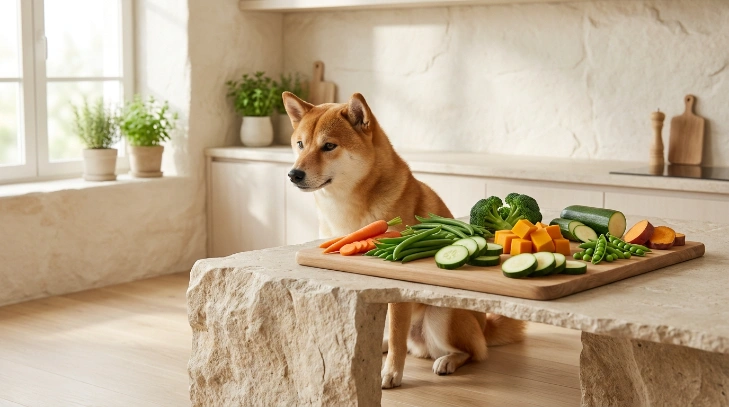
You are chopping vegetables for dinner when your dog appears beside you, hoping for a bite.
Some vegetables can make nutritious occasional treats for healthy dogs. Others need specific preparation, and a few—especially onions, garlic, leeks, and chives—should never be intentionally fed.
So, what vegetables can dogs eat safely?
Dogs can eat several familiar vegetables, including carrots, green beans, cucumbers, bell peppers, broccoli, cauliflower, peas, pumpkin, sweet potatoes, zucchini, celery, and small amounts of spinach when prepared appropriately. Vegetables are optional treats, not replacements for a complete and balanced dog food.
Here is what you need to know before sharing from the cutting board.
1. Carrots
Carrots are one of the easiest dog-safe vegetables to serve. They are low in calories, contain fiber, and provide beta-carotene, which the body can use to make vitamin A.
Raw carrots can be crunchy treats for many dogs, while lightly cooked carrots are softer and easier to chew. Cut them into pieces appropriate for your dog’s size to reduce choking risk.
Even healthy vegetables can add calories, so portion control still matters.
2. Green Beans
Plain green beans can be offered cooked, steamed, or raw if they are cut safely for your dog.
Avoid green beans prepared with butter, salt, garlic, onion, sauces, or seasoning blends. The vegetable may be safe while the ingredients added to it are not.
Low-sodium or no-salt-added canned green beans can be useful when convenience matters, but rinse them before serving.
3. Cucumbers
Cucumbers have a high water content and are relatively low in calories, making them a refreshing snack for many dogs.
Wash them thoroughly and cut them into small pieces. Peeling is optional for most dogs, though dogs with sensitive stomachs may tolerate peeled cucumber more easily.
Cucumber should never be considered a substitute for fresh drinking water, especially during warm weather.
4. Bell Peppers
Plain bell peppers are generally dog-safe. Red, yellow, orange, and green bell peppers can all be offered in modest amounts.
Remove the stem and seeds, then cut the flesh into manageable pieces. Bell peppers can be served raw or lightly cooked without oil, salt, or spices.
If your dog has never eaten bell pepper before, begin with a small amount and watch for digestive upset.
5. Broccoli
Dogs can eat broccoli in small amounts, but this is a vegetable where moderation matters.
Broccoli contains fiber, and large amounts may cause gas or gastrointestinal irritation. Tough stalks can also be difficult for some dogs to chew safely.
Offer small, plain florets and avoid rich sauces, cheese, butter, garlic, or other seasonings.
6. Cauliflower
Cauliflower is another dog-safe option when served plain.
It is low in calories and contains fiber, but too much can lead to gas or stomach discomfort. Light cooking can make it easier to chew, though raw small pieces may also be tolerated by some dogs.
Keep portions modest, particularly when your dog is trying it for the first time.
7. Peas
Green peas, garden peas, and snap peas can be suitable treats for many healthy dogs.
Fresh or frozen plain peas are preferable to canned varieties with added sodium. If you use canned peas, choose no-salt-added options and rinse them well.
Because peas are also used in many commercial dog foods, they are already a familiar ingredient for many pets.
8. Pumpkin
Plain pumpkin can be useful as an occasional addition to a dog’s diet, particularly because it contains fiber.
The key word is plain.
Use plain cooked pumpkin or plain canned pumpkin. Do not use pumpkin pie filling, which can contain sugar, spices, and other ingredients that are inappropriate for dogs.
If your dog already has digestive upset, do not assume pumpkin will fix the problem. Our guide to dog diarrhea explains when loose stools should be monitored and when veterinary care is more appropriate.
9. Sweet Potatoes
Sweet potatoes can be fed after they are thoroughly cooked and served plain.
Do not feed large chunks of raw sweet potato. Cooked sweet potato is softer and easier to digest.
Remove the skin if your dog has difficulty chewing or digesting fibrous foods, and never add butter, marshmallows, brown sugar, or seasoning.
A few small pieces are enough for most dogs.
10. Zucchini
Zucchini is generally safe and low in calories.
It can be offered raw in small pieces or lightly cooked without added oil or seasoning. Because of its mild flavor, some dogs enjoy it while others ignore it completely.
There is no nutritional need to persuade a dog to eat a vegetable they do not like.
11. Celery
Plain celery can be offered in small quantities.
Cut it into short pieces, particularly for small dogs, because the fibrous strings can make large chunks harder to chew.
Celery has a high water content, but—as with cucumber—it should not replace regular access to clean drinking water.
12. Spinach
Healthy dogs can generally eat small amounts of spinach, but this is not a vegetable to feed in large quantities.
Spinach contains oxalates, so dogs prone to certain urinary or kidney problems may need to avoid it. If your dog has a medical condition or follows a therapeutic diet, ask your veterinarian before regularly adding spinach or other human foods.
Quick Guide: Vegetables Dogs Can Eat
| Vegetable | Can dogs eat it? | Best preparation |
|---|---|---|
| Carrots | Yes | Raw or cooked, cut small |
| Green beans | Yes | Plain, fresh, frozen, or low-sodium canned |
| Cucumbers | Yes | Wash and slice |
| Bell peppers | Yes | Remove stem and seeds |
| Broccoli | Small amounts | Plain small florets |
| Cauliflower | Small amounts | Plain, raw or lightly cooked |
| Peas | Yes | Fresh or frozen, plain |
| Pumpkin | Yes | Plain cooked or plain canned |
| Sweet potatoes | Yes | Cook thoroughly, serve plain |
| Zucchini | Yes | Raw or lightly cooked |
| Celery | Yes | Cut into small pieces |
| Spinach | Small amounts | Plain, ask vet if urinary disease |
What Vegetables Should Dogs Not Eat?
Knowing which vegetables to avoid is just as important as knowing the safe list.
Onions
Dogs should not eat onions. Onions belong to the Allium family and can damage red blood cells, potentially causing anemia.
This applies to raw, cooked, powdered, and dehydrated onion.
Be especially careful with soups, gravies, sauces, seasoning mixes, and leftovers, where onion can be present even when it is not obvious.
Garlic, Leeks, and Chives
Garlic, leeks, and chives are also members of the Allium family and should not be intentionally fed to dogs.
Do not assume that a small amount of garlic is healthy because it is a common human ingredient. Dogs process some compounds differently from people.
If your dog eats a significant amount of an Allium vegetable, contact your veterinarian for guidance.
Wild Mushrooms
Wild mushrooms should be avoided because identifying toxic species can be difficult even for experienced people.
If your dog eats an unknown mushroom outside, take a clear photograph of it if you can do so safely and contact your veterinarian or animal poison service promptly.
Plain store-bought culinary mushrooms are different from unidentified wild mushrooms, but there is little reason to make mushrooms a regular dog treat when safer options are available.
How Much Vegetables Can a Dog Eat?
Vegetables should remain treats or small meal additions, not the foundation of your dog’s diet.
A practical rule is to keep all treats combined to about 10% or less of your dog’s daily calories, with the majority coming from complete and balanced dog food.
The correct portion depends on your dog’s size, activity level, weight, health, and the specific vegetable.
A few carrot slices may be appropriate for one dog while the same portion may be excessive for a very small breed.
If you are already feeding fruit as treats, count fruit and vegetables together rather than treating each category as a separate allowance. Our guide to what fruits dogs can eat covers the safest fruit choices and the important grape and raisin warning.
Can Vegetables Replace Dog Food?
No.
Vegetables can add variety, but they do not provide a complete canine diet by themselves.
A balanced dog food is formulated to provide the protein, fats, vitamins, minerals, and other nutrients a dog needs in appropriate proportions.
If you are thinking about preparing a homemade diet, work with a veterinarian or board-certified veterinary nutrition professional rather than simply combining meat, rice, and vegetables based on guesswork.
Can Puppies Eat Vegetables?
Many of the same dog-safe vegetables can be offered to puppies in very small, appropriately prepared portions once they are eating solid food.
Puppies, however, have specific nutritional requirements for growth. Treats should not displace complete puppy food.
Choking risk is also especially important, so cut firm foods such as carrots or green beans into pieces suitable for the puppy’s size.
Can Dogs Eat Raw Vegetables?
Some vegetables are fine raw, including carrots, cucumbers, bell peppers, zucchini, and small amounts of broccoli.
Others are better cooked. Sweet potatoes should be cooked thoroughly, and pumpkin is typically served cooked or canned plain.
Cooking should be simple: steam, boil, or bake without salt, butter, garlic, onion, sauces, or spice blends.
Can Vegetables Cause Diarrhea?
Yes.
Even safe vegetables can cause digestive upset if your dog eats too much fiber or receives a large amount of unfamiliar food suddenly.
Introduce one new food at a time and start with a small portion.
If vomiting or diarrhea develops, stop the new food and monitor your dog. Persistent symptoms, weakness, blood in the stool, dehydration, or significant abdominal discomfort deserve veterinary attention.
Dogs with recurring digestive problems may need a more structured diet review rather than repeated food experiments. If itching, paw licking, ear issues, and digestive symptoms occur together, our guide to dog food allergies explains why true food allergies require careful diagnosis.
What About Vegetables in Commercial Dog Food?
Vegetables such as carrots, peas, sweet potatoes, and green beans are commonly included in commercial dog foods.
That does not mean adding more of those ingredients automatically makes your dog’s diet healthier.
Complete dog foods are formulated around the nutrient profile of the entire recipe. Extra foods alter calorie intake and can unbalance a diet when they are given in large amounts.
Think of vegetables as optional extras, not nutritional insurance.
Frequently Asked Questions
What vegetables are healthiest for dogs?
There is no single healthiest vegetable for every dog. Carrots, green beans, cucumbers, zucchini, and plain pumpkin can all be useful low-calorie treats for many healthy dogs when prepared correctly.
Can dogs eat carrots every day?
Many healthy dogs can have a small amount of carrot regularly, but it should still count toward the total treat allowance. Large quantities can add unnecessary calories and fiber.
Can dogs eat broccoli?
Yes, in small amounts. Large portions may cause gas or stomach irritation, so serve small plain florets.
Can dogs eat green beans?
Yes. Plain green beans can be a convenient low-calorie treat. Avoid versions cooked with butter, salt, garlic, onion, or rich sauces.
Can dogs eat onions?
No. Onions are toxic to dogs and can damage red blood cells. Garlic, leeks, and chives should also be avoided.
Can dogs eat potatoes?
Plain, fully cooked potato can be tolerated by many dogs, but raw or green potatoes are not appropriate. If you choose to offer potato, it should be cooked thoroughly and served without butter, salt, or seasoning.
Can dogs eat vegetables every day?
Small amounts of appropriate vegetables can fit into some healthy dogs’ routines, but vegetables are optional. Your dog’s complete and balanced food should remain the main source of nutrition.
PetCareRoutine Perspective
Vegetables can be simple, inexpensive treats—but the safest approach is not to assume that every food from your kitchen belongs in your dog’s bowl.
Choose vegetables known to be dog-safe. Serve them plain. Remove tough stems, seeds, skins, or other parts that can cause choking or digestive problems when necessary. Keep portions modest and introduce new foods gradually.
Most importantly, keep onions, garlic, leeks, chives, and unidentified wild mushrooms away from your dog.
And remember the bigger nutrition picture: vegetables are extras, not replacements for a complete and balanced diet.
If a particular vegetable seems to trigger vomiting, diarrhea, itching, or another recurring symptom, stop offering it and discuss the pattern with your veterinarian rather than continuing to experiment.
Once you know which vegetables are safe, snack time becomes much easier—and much less risky.
Source: https://www.petmd.com/dog/nutrition/what-vegetables-can-dogs-eat







[…] for a growing puppy, nutrition is important during this stage too. Many of the principles in our guide to vegetables dogs can safely eat can help you distinguish dog-safe extras from foods that do not belong in a puppy’s diet, […]
Comments are closed.