

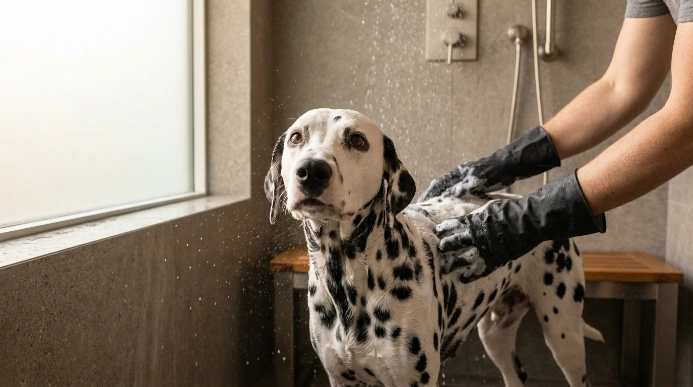
How Often Should You Bathe Your Dog? 7 Essential Tips
Your dog comes inside after rolling across the grass, jumps onto the sofa, and brings a very recognizable smell with them.
Time for a bath?
Probably.
But what if your dog isn’t dirty? Should you still bathe them every week? Every month? Or only when they start to smell?
The answer isn’t as simple as choosing one number on the calendar.
How often you should bathe your dog depends on their coat, lifestyle, skin condition, health, and how dirty they actually get.
Most healthy dogs don’t need extremely frequent baths. VCA Animal Hospitals explains that dogs generally need bathing on an occasional basis, particularly when their coats become dirty or develop an odor. Healthy non-shedding breeds may commonly be bathed around every six to eight weeks, while other dogs have different requirements.
Merck Veterinary Manual provides a useful general reference point of bathing with pet shampoo roughly monthly depending on the season, or whenever a dog’s coat becomes particularly dirty or smelly.
Neither recommendation should be treated as a universal schedule.
Here’s how to determine what makes sense for your dog.
1. Start With Your Dog’s Coat Type
Two dogs can live in the same house and still need completely different bathing schedules.
A Beagle with a short coat doesn’t have the same grooming requirements as a Poodle. A Golden Retriever’s dense double coat presents different challenges from a Yorkshire Terrier’s long, fine hair.
That’s why breed and coat type should be among the first things you consider.
Dogs with relatively low-maintenance coats may only need occasional bathing when dirty.
Dogs with continuously growing or non-shedding coats often receive baths as part of their regular professional grooming routine.
Heavy double-coated dogs can also benefit from bathing during seasonal shedding periods. VCA specifically notes that dogs with heavy undercoats may benefit from baths during spring and fall shedding.
Bathing is only one part of coat maintenance, though.
Regular brushing is often more important than adding another bath.
Our complete dog grooming at home guide covers brushing, mat prevention, nails, paws, ears, and other grooming essentials.
2. Let Your Dog’s Lifestyle Influence the Schedule
Consider two Labradors.
One spends most of the day indoors and takes short walks through a clean neighborhood.
The other spends weekends swimming, hiking, running through muddy trails, and investigating every unpleasant smell it can find.
They shouldn’t necessarily have identical bathing schedules.
Active outdoor dogs may need baths more frequently because their coats collect:
- Mud
- Dirt
- Sand
- Plant material
- Unpleasant odors
- Other environmental debris
VCA notes that lifestyle is an important factor in determining bathing frequency and specifically mentions dogs that run through puddles, swim in dirty water, or roll in unpleasant material as obvious candidates for additional baths.
Common sense matters.
If your dog comes home covered in mud, you don’t need to wait until their scheduled monthly bath.
At the same time, a little dust doesn’t always require shampoo.
Sometimes brushing the coat or wiping dirty areas with a damp towel is enough. Veterinary-reviewed AKC guidance recommends wiping outdoor debris such as dirt, mud, sand, or plant material from the coat as needed.
Not every dirty paw requires a full bath.
3. Don’t Bathe Your Dog Just Because the Calendar Says So
A fixed bathing schedule is convenient for us.
Your dog’s skin doesn’t own a calendar.
Suppose you’ve decided your dog needs a bath every Saturday.
Saturday arrives, but your dog’s coat is clean, doesn’t smell, and their skin looks healthy.
Do they really need another shampoo?
Probably not just because seven days have passed.
Overbathing can remove natural oils and contribute to dry or irritated skin. VCA cautions that overly frequent bathing can affect coat quality and strip natural oils, while Merck notes that excessive bathing and repeated wetting can worsen or predispose some skin problems.
Instead, ask:
Is my dog’s coat actually dirty?
Does my dog smell unusually strong?
Is bathing part of a veterinarian-prescribed skin treatment?
Does their coat type require scheduled grooming?
Those questions are much more useful than blindly following an arbitrary weekly routine.
4. Always Use Shampoo Made for Dogs
Your dog smells terrible.
Your dog shampoo bottle is empty.
Your expensive human shampoo is sitting right there.
It may be tempting.
Don’t make it your substitute.
Dogs should be bathed with products specifically formulated for them. VCA explains that canine skin differs from human skin in thickness and pH and advises against using human shampoo, including baby shampoo, for routine dog bathing.
Choose a gentle dog-specific shampoo appropriate for your dog’s needs.
If your dog has normal, healthy skin, you generally don’t need a complicated collection of products.
If your dog has:
- Persistent itching
- Recurrent skin infections
- Excessive oiliness
- Flaking
- Unusual odor
- Redness
- Hair loss
don’t simply keep changing shampoos.
Those can be signs of an underlying skin problem.
Our dog itchy skin and its common causes explains why allergies, parasites, bacterial infections, yeast, and other conditions can all cause itching.
Repeatedly bathing an undiagnosed skin problem may hide some signs without fixing the cause.
5. Dogs With Skin Problems May Need a Different Schedule
Here’s where the usual advice about avoiding frequent baths changes.
A veterinarian may deliberately prescribe frequent bathing for certain skin diseases.
For example, medicated shampoos may be used as part of treatment for bacterial infections, yeast infections, and allergic skin disease. VCA notes that medicated bathing schedules depend on the condition and may sometimes involve weekly baths or another veterinarian-directed frequency.
Merck’s guidance on canine atopic dermatitis similarly notes that weekly to biweekly bathing may help reduce allergen exposure in affected dogs.
That’s very different from bathing a healthy dog every week simply because you prefer them to smell freshly shampooed.
Medicated shampoo isn’t ordinary shampoo
If your veterinarian gives you medicated shampoo, follow the instructions carefully.
Some products need to remain in contact with the skin for several minutes before rinsing.
VCA notes that medicated shampoo commonly requires a specified contact period, often around 5–10 minutes depending on the product and veterinary instructions.
Don’t assume:
More shampoo = faster healing.
Don’t change the frequency yourself.
And don’t stop treatment early just because the skin looks better unless your veterinarian tells you to.
6. Learn the Signs You May Be Bathing Too Often
Your dog’s coat can give you clues when something isn’t working.
After introducing frequent baths, watch for:
- Dry skin
- Flaking
- Increased itching
- Dull coat
- Irritation
- Redness
- Changes in coat texture
These symptoms don’t prove bathing is responsible.
Dogs develop skin problems for many reasons.
But if symptoms begin after you’ve dramatically increased bathing frequency or changed grooming products, that’s worth mentioning to your veterinarian.
VCA specifically recommends discussing frequent bathing with a veterinarian, who may suggest changing products, adding an appropriate conditioner, or using a different treatment strategy depending on the dog’s skin.
Don’t solve dryness by applying random human lotions or oils.
A dog’s coat can make it difficult to see what’s really happening underneath.
If irritation persists, get the skin examined.
7. Make Every Bath Safe and Comfortable
Correct frequency doesn’t help much if every bath is stressful.
Prepare before bringing your dog into the bathing area.
Have ready:
- Dog shampoo
- Towels
- A non-slip surface
- Brush or comb
- Any veterinarian-prescribed products
- Appropriate rewards
Brush before the bath
This is particularly important for longer coats.
Water can make existing tangles and mats more difficult to manage. VCA recommends removing burrs and tangles before bathing and warns that severe matting is better handled professionally.
Never casually cut tight mats with household scissors.
Skin can become pulled into the mat, creating a serious risk of accidentally cutting your dog.
Use comfortably warm water
For routine bathing, comfortably warm water is generally appropriate.
Extremely hot water can be uncomfortable, while blasting a dog with freezing garden-hose water isn’t a great way to create a positive relationship with bathing.
VCA recommends warm water for typical baths.
Rinse thoroughly
This is one of the easiest steps to rush.
Work water through the coat until you’ve removed the shampoo completely, particularly with dense coats.
VCA emphasizes thoroughly rinsing shampoo from the skin and coat.
Dry properly
Towel-dry your dog after bathing and keep them somewhere comfortably warm while they finish drying.
Long or dense coats may require additional drying.
If using a dryer, make sure the temperature and airflow are safe and don’t frighten or overheat your dog.
What About Puppies?
Puppies are excellent at getting dirty.
House-training accidents, spilled food, mud, and enthusiastic exploration can all create situations where a bath makes sense.
VCA notes that young puppies who soil themselves can be bathed as needed.
But bath time is also a learning experience.
A puppy who learns that grooming means slipping around, being forcibly restrained, and getting water sprayed into their face may become an adult dog who hates bathing.
Keep early experiences calm.
Let your puppy explore the bathing area.
Use a secure non-slip surface.
Introduce water gradually.
Reward relaxed behavior.
You aren’t only cleaning today’s dirty puppy.
You’re teaching tomorrow’s adult dog how grooming feels.
Should You Bathe Your Dog After Swimming?
It depends on where they swam and what their coat is like afterward.
Swimming in dirty ponds, seawater, chlorinated pools, or questionable water can leave material on the coat.
Rinsing with fresh water afterward can be useful, and a proper bath may be warranted if the dog becomes dirty or develops an odor.
Pay particular attention to dogs prone to skin or ear problems.
And remember that repeated swimming keeps the skin wet even when shampoo isn’t involved.
Dry your dog appropriately after water activities and watch for skin irritation.
What If Your Dog Still Smells After a Bath?
A persistent unpleasant odor shouldn’t always be solved with stronger shampoo.
Odor can sometimes accompany:
- Skin infection
- Yeast overgrowth
- Ear disease
- Dental problems
- Anal-sac problems
- Wet or matted coat
- Other medical conditions
If you’ve properly bathed and dried your dog but the strong smell quickly returns, consider whether you’re dealing with a medical problem rather than a cleanliness problem.
Similarly, don’t repeatedly spray perfumes or human fragrances over the coat.
Veterinary-reviewed AKC guidance specifically advises against using non-veterinarian-approved perfumes and fragrances on dogs.
Find the source of the odor instead of covering it.
When Should You Ask Your Veterinarian?
Talk to your veterinarian if bathing is accompanied by or being used to manage:
- Severe itching
- Red or inflamed skin
- Hair loss
- Open sores
- Persistent dandruff
- Recurrent infections
- Strong unusual odor
- Greasy skin
- Pain
- Repeated ear problems
Also seek advice if your dog suddenly requires far more frequent bathing because their coat or skin has changed.
Merck notes that skin changes can sometimes be associated with broader medical conditions, making history—including bathing frequency—an important part of veterinary skin evaluation.
The problem may not be grooming at all.
Frequently Asked Questions
How often should you bathe your dog?
There isn’t one schedule for every dog. Healthy dogs are often bathed when dirty or smelly, with factors such as coat type, lifestyle, age, and health determining frequency. Merck gives roughly monthly bathing as a general reference, while VCA notes that some healthy non-shedding dogs may commonly be bathed every six to eight weeks.
Is bathing a dog once a week too much?
It may be unnecessary for many healthy dogs and could contribute to dry or irritated skin depending on the dog and products used. However, veterinarians sometimes deliberately prescribe weekly or even more frequent medicated baths for particular skin diseases.
Can I use human shampoo on my dog?
Human shampoo, including baby shampoo, isn’t recommended for routine dog bathing. Use a product formulated for dogs.
Should I bathe my dog if they smell?
A dirty coat or normal “doggy odor” can be a reasonable reason for a bath. If a strong odor persists or quickly returns despite proper bathing, investigate potential skin, ear, dental, or other problems.
Should I brush my dog before or after bathing?
Brush before bathing, particularly if the coat contains tangles, burrs, or mats. Existing tangles can become harder to remove after getting wet.
PetCareRoutine Perspective
So, how often should you bathe your dog?
For most healthy dogs, the answer isn’t “every seven days” or “exactly once a month.”
It’s when your individual dog needs it.
Look at their coat. Consider their lifestyle. Think about their breed and grooming requirements. Notice whether they’re actually dirty or simply due for a good brushing.
Most importantly, separate routine bathing from medical bathing.
A healthy dog generally doesn’t need constant shampooing. A dog with allergies or a diagnosed skin condition, however, may benefit from frequent medicated baths prescribed by a veterinarian.
Use dog-specific products, rinse thoroughly, dry appropriately, and make the experience as comfortable as possible.
A successful bathing routine isn’t the one that gives you the cleanest-smelling dog every Saturday.
It’s the one that keeps your dog’s skin comfortable, coat healthy, and grooming experience positive.
Continue reading more
https://www.merckvetmanual.com/dog-owners/routine-care-of-dogs/routine-health-care-of-dogs




[…] guide on how often you should bathe your dog explains how coat, activity and skin condition should influence the […]
Comments are closed.